Customer Pain Points Examples: 8 Startup Ideas for 2026
Customer pain points examples from 8 industries, with the startup opportunity behind each one and quick ways to validate demand before you build anything.
You're three menus deep in a cancellation flow, the page has just offered a discount you never asked for, and the only way out is a phone call during business hours. That moment is a customer pain point, and it's also a business signal with a price attached.
A pain point isn't a mood like "marketing is hard." It's a specific, recurring cost that someone already pays in time, money or lost sleep, and it shows up in the same words across threads, subreddits and review sites. The eight below keep resurfacing on Hacker News and Reddit because they're expensive, boring, and nobody has fixed them well.
For each one you'll get the customer's exact frustration, the business model it implies, the cheapest test you can run before writing code, and the trade-off that makes the idea hard to defend once it works.
If you want the principle underneath all eight, it's reducing friction in customer support: the winning product lowers the effort the customer spends, not the effort the company spends.
1. Subscription Fatigue and Unexpected Price Increases
A designer pays for four tools she opens twice a month. Each renewal is small enough to ignore alone, and the combined total is large enough to sting when it lands on one statement.
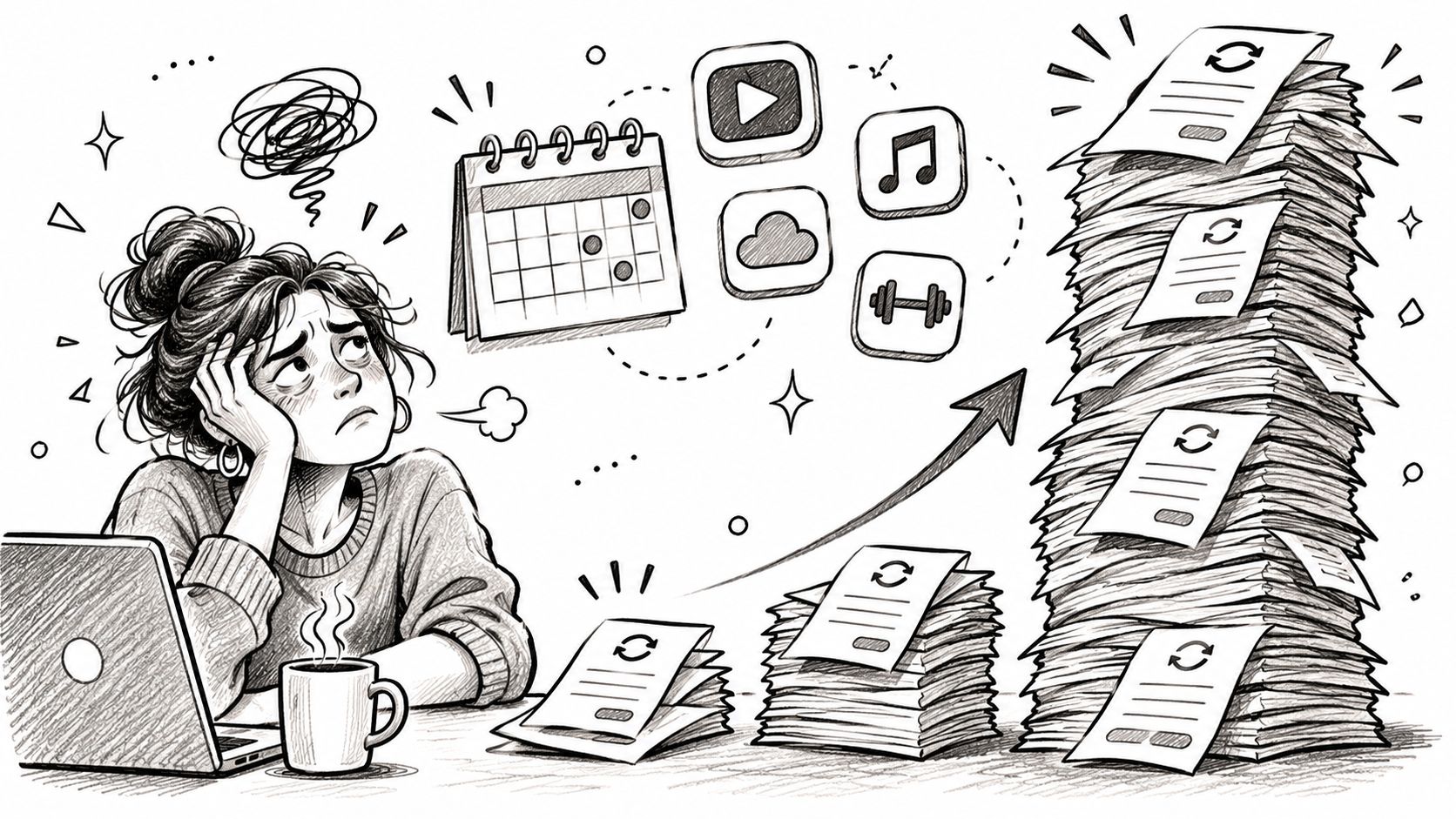
The frustration. Customers don't discover this problem at checkout. They discover it months later, on a bank statement, and the reaction is rarely "I should downgrade." It's "what else is billing me?" Streaming services have trained people to rotate in and out, so the resentment isn't about price alone. It's about paying for something they forgot they owned.
What the idea looks like
Two shapes work. A consumer service that reads a statement, lists every recurring charge and cancels the ones the customer approves. Or a spend tool for small teams that maps seats across the whole software stack and flags the licences nobody signed into this quarter. The second version sells better because the buyer can point at a number in a budget line.
The first test
- Search the confession language. Phrases like "forgot I was paying for" and "still paying for" surface both the tools people resent and the vocabulary for your landing page.
- Run ten audits by hand. A spreadsheet, a shared inbox and a calendar reminder prove people will hand over billing data before you touch a bank integration.
- Charge for the cancellation, not the report. The report is the free hook. The labor of sitting through a retention call is what people pay to skip.
What doesn't work: a dashboard that only shows the total. People already know the total is too high. They pay for the exit.
The trade-off is that the audit is a service with human hours inside it, and banks keep folding subscription views into their own apps. The defensible version is narrow: freelancers with a known stack, or agencies managing software for a dozen clients, where the cancellation work repeats and the payer is a business.
2. Hidden Fees and Drip Pricing
A hotel room listed at a low headline rate becomes something much higher at checkout once the resort fee, the service charge and the local tax line land. The customer doesn't blame the hotel's costs. They blame the hotel.
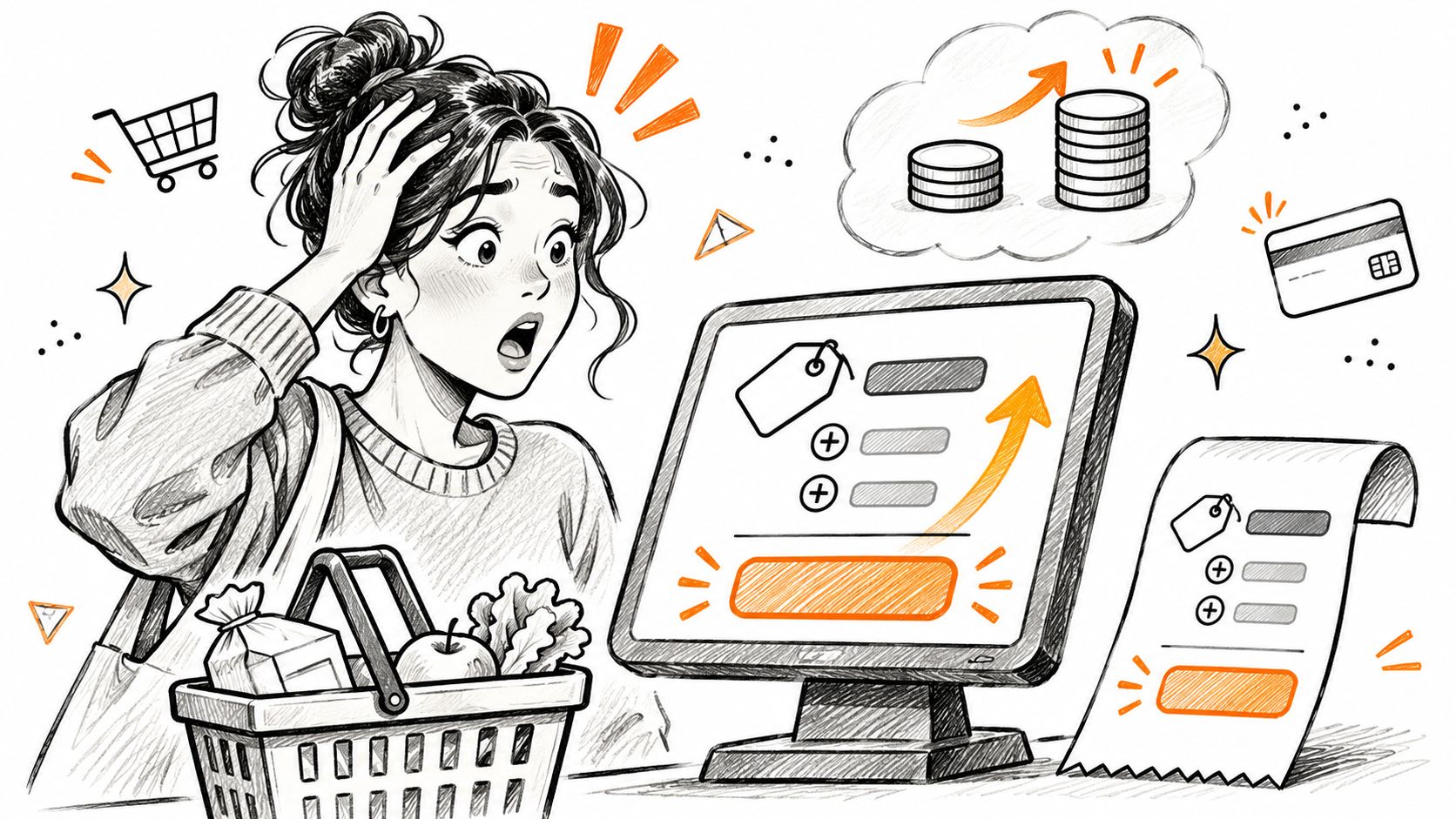
Drip pricing works on the first purchase and costs you the second. That erosion is expensive at scale: Qualtrics XM Institute estimated that bad customer experiences put $3.8 trillion in global sales at risk for 2025, based on a study of nearly 24,000 people across 23 countries (Qualtrics).
Who actually pays for transparency
Consumers say they want total prices and then click the cheapest headline number anyway. That makes a consumer-facing price comparison app a hard business. The budget sits inside the operator: ticketing platforms, travel sites and marketplaces that face enforcement risk over how fees are disclosed, and whose legal teams want an audit trail more than they want a discount.
The pricing question underneath is what a customer is actually willing to pay, and the gap between stated willingness and real behavior is widest at the fee line.
The first test
- Collect checkout screenshots. Twenty examples of a fee appearing only at step three, from forums and your own bookings, are market research you can show a buyer.
- Sell one fixed-fee audit. Review a single checkout flow for a set price. If nobody pays for the findings, nobody will pay for the software.
- Count the abandoned carts. Instrument where people leave checkout and match it to the step where a new fee appears.
The tension is easy to state. The company paying you is the company adding the fee. Software that helps operators show honest totals sells slowly and holds. Software that helps them hide fees more smoothly is a lawsuit with a login page.
3. Difficulty Reaching a Human for Customer Support
A customer's card gets charged twice on a Friday. The chatbot offers a help article. The phone tree offers four menus. The email form promises a response in three business days.
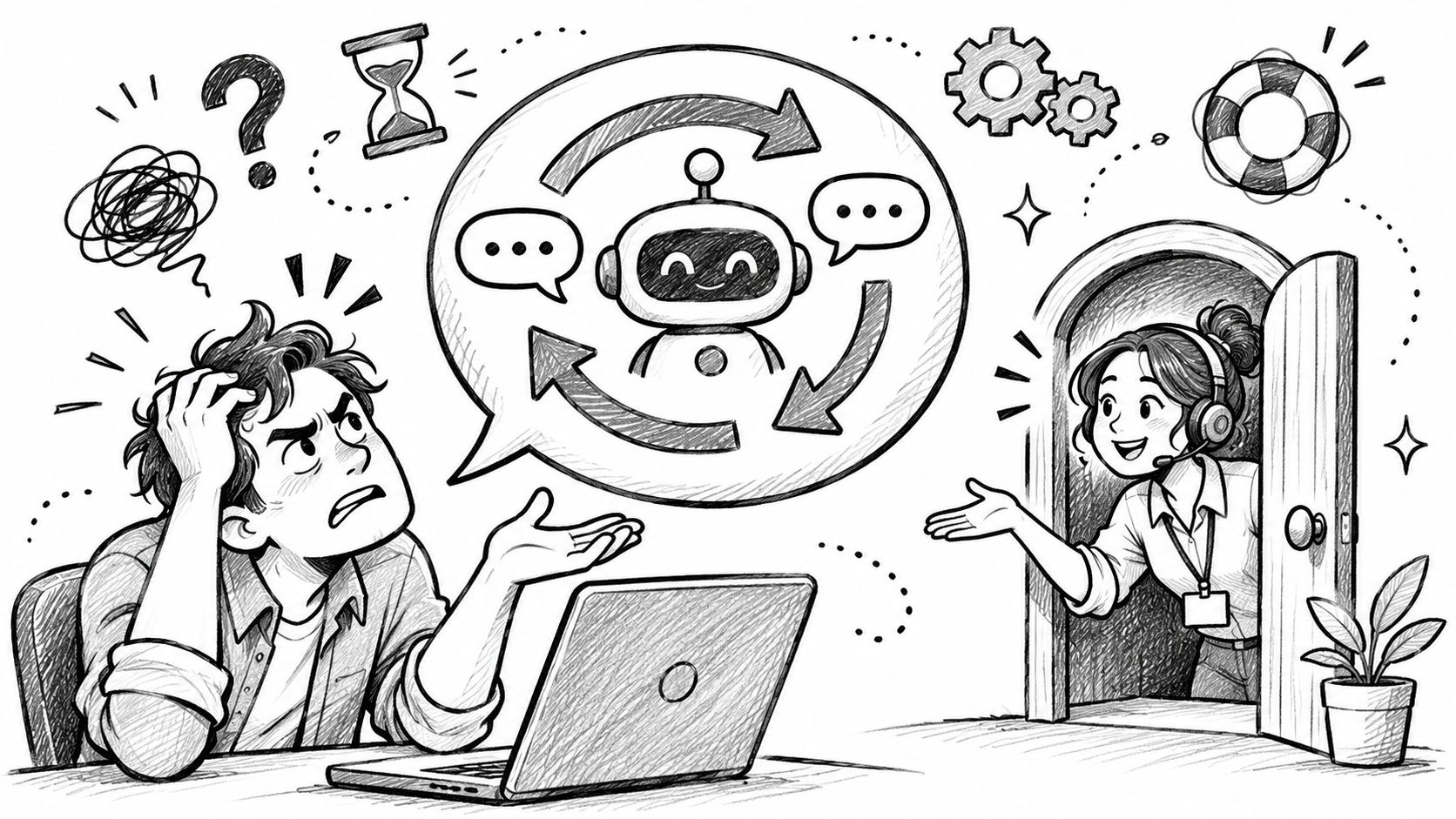
The frustration isn't that the product broke. It's that reaching a person who can fix it has become a puzzle. In a 2026 survey of 2,009 U.S. consumers, 44% named difficulty reaching a person as the leading negative effect of company AI, and 43% said they would pay more to guarantee human support (Alchemer).
Access fails earlier than that. Capgemini's 2025 study of 9,500 consumers found 42% frustrated by complex interactive voice-response menus and 40% unable to find customer-service contact information at all (Capgemini).
The model and its margin problem
Escalation as a service is the cleanest version: a layer in front of the existing helpdesk that keeps the conversation history and routes to a named human with authority to refund. The value isn't speed. It's not repeating yourself. A step-by-step problem resolution workflow that names an owner at each stage beats any tool that only measures satisfaction after the fact.
Practical rule: the handoff is the product. If your buyer can't see who owns the ticket at every step, you're selling another chatbot with better manners.
Human support doesn't scale on cost per ticket, and that's the wall. The way through is a narrow, high-value segment where one unresolved ticket costs more than an hour of an agent's time, such as billing disputes, healthcare scheduling or anything with a regulatory clock. For the wider pool of ideas built the same way, this list of startup ideas with evidence behind them sorts them by the complaint that started them.
4. Frustrating Cancellation Processes and Dark Patterns
Cancelling should take one click. On some services it takes a phone call, a retention script, a confirmation email that never arrives, and a charge the following month.
The frustration is betrayal rather than inconvenience. Microsoft's 2016 State of Global Customer Service report found that 60% of global consumers had stopped doing business with a brand after a single poor customer-service experience (Microsoft). A cancellation flow is that single experience, engineered on purpose. The customer who hits a wall on the way out tells people, and the complaint threads keep resurfacing for years.
Where the money is
Two businesses hide here. On the consumer side, a cancel-for-you service that sits on the phone so the customer doesn't have to, priced per cancellation or as a small subscription. On the business side, compliance tooling that keeps cancellation flows inside the law and produces an audit trail showing who clicked what and when.
Regulators have already acted against cancellation and fee designs that turned friction into legal exposure. That enforcement pressure is what makes the business-side version sellable: the buyer isn't paying for ethics, they're paying to stay out of trouble.
The first test
- Audit five competitor flows. Count the clicks, phone calls and retention offers required to leave, then publish the comparison. That page is both marketing and product spec.
- Offer one-click cancellation as a trust signal. For a subscription business, the pitch is that fewer dark patterns means fewer chargebacks and better reviews. The validation question is whether operations or legal teams will pay for that outcome, so measure replies from strangers with budget, not applause on the published comparison. Shares and likes are not a signal. A work email or a payment is.
- Sell the checklist before the software. A jurisdiction-by-jurisdiction compliance checklist tells you whether operations teams will pay for the deeper tool. If buyers won't pay for the checklist, they won't pay for the software built on top of it.
Regulation is both the moat and the risk. Rules differ by market, they change, and payment processors can fold cancellation management into their own dashboards. A tool that only handles one jurisdiction is a feature. The consumer version has the opposite problem: demand is real, but each cancellation is cheap to deliver and hard to charge much for, so the margin lives in volume or in bundling several subscription chores into one service.
5. Slow Onboarding and Delayed Time-to-Value
A new user signs up on a Tuesday, sees an empty dashboard, and is asked to configure permissions before doing anything useful. On Thursday they open it once more, then never again.
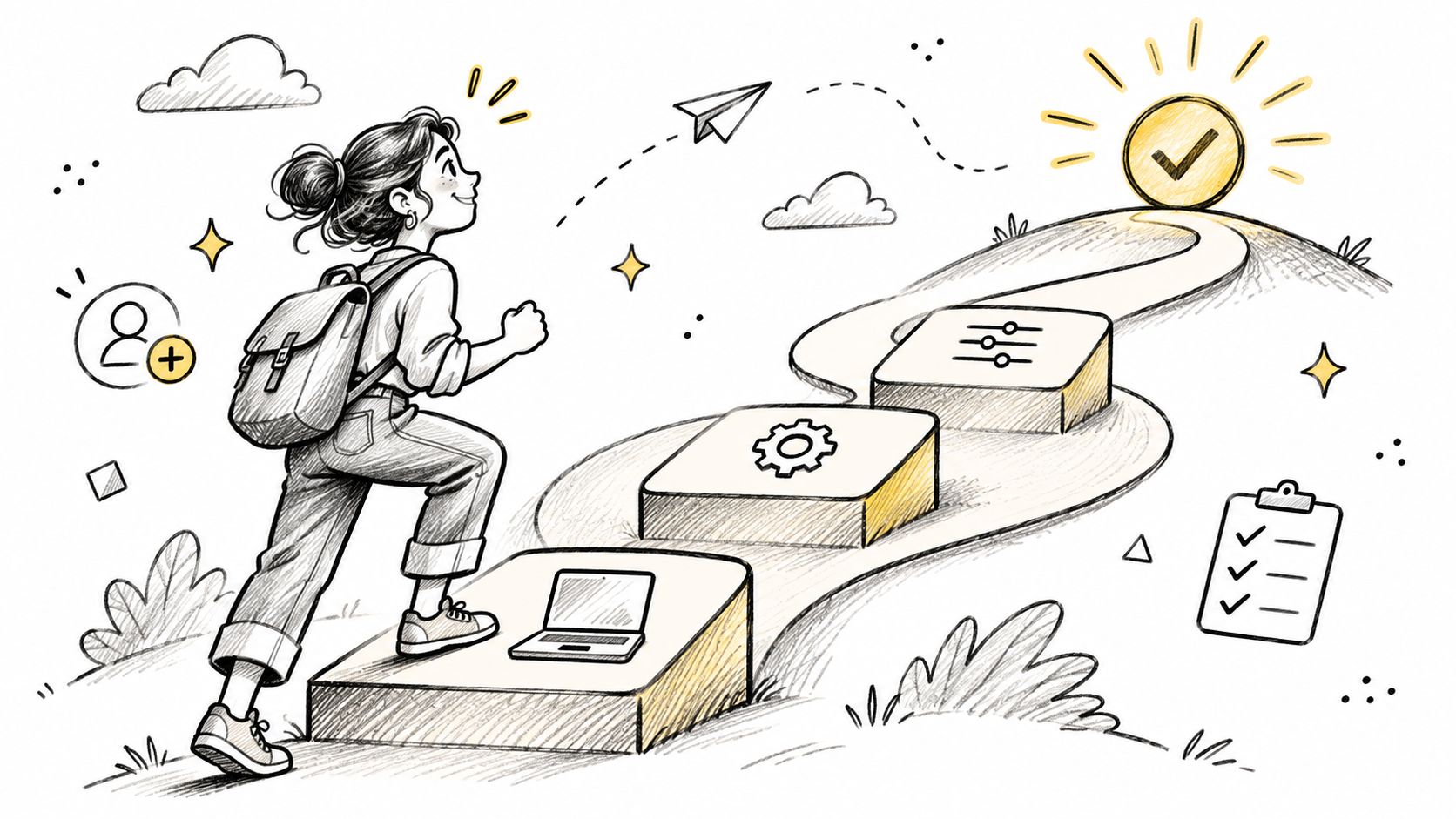
The frustration is that the product never got the chance to be judged. Setup eats the first session, and the value the buyer was promised arrives after a chain of steps they don't understand. The company reads this as churn. The customer reads it as "this wasn't for me."
The idea worth testing
Onboarding as a service for a specific category: a migration and setup crew for a named tool, a template library that gets a team to its first real output in one session, or an embedded checklist product for teams shipping complex software. The narrow version wins. "Onboarding for B2B SaaS" is a crowded category. "Migration from spreadsheets to one specific project tool, done on a single call" is a product.
The first test
Pick one activation event, the moment a user first gets the result they came for, and watch where new signups fall out before it. Then sell the fix manually: run five onboarding sessions by hand for real customers, charge for them, and write down every step you repeated. What you repeat becomes the software.
A template is not a feature. It's a promise that the first session ends with something finished.
The hard part is that product teams believe they own onboarding, so you're selling to the group most likely to build it in-house. The defensible version attaches to a tool ecosystem you don't control but can integrate with and stays useful as that tool's setup gets more complex.
6. Tool Sprawl and Disconnected Data
The same customer record lives in the CRM, a spreadsheet, a support tool and someone's inbox. Every Monday a coordinator retypes it into a report that's out of date by Tuesday.
The frustration is invisible labor. Nobody logs a ticket for copying data between systems, so the cost never shows up in a dashboard. It shows up as a slow month, a report nobody trusts, and a team that can't answer a simple question without three tabs open.
What the evidence says about structure
A Finnish wholesale-logistics case study found that redesigning complaint management around standardized fields cut average handling time by about 15%, roughly eight minutes per complaint, once each complaint carried a problem type, process stage, responsible handoff, severity and recurrence (Business and Management). The lesson generalizes. Messy inputs become valuable when they're forced into a schema someone can sort.
The same logic applies to feedback you already collect, which is why turning customer feedback into structured data is a product decision, not a reporting chore.
The first test
- Map one niche's stack. List the five tools a ten-person agency uses and find the handoff where a human copies data.
- Build the single integration. Not a platform. One two-way sync that removes the copying, priced monthly.
- Measure hours saved per week. Ask five users to log the minutes they save for two weeks. That number is your sales deck.
The danger is platform risk in both directions. The apps you connect can ship the integration themselves, and automation platforms already cover the generic case. The defensible wedge is the domain logic inside the sync, the field mappings and rules specific to an industry, which a generic connector will never get right.
7. Lack of Real-Time Order and Delivery Visibility
A customer orders a birthday gift, gets a tracking number with no events on it, and refreshes the page four times a day. When the parcel doesn't arrive, they contact support. The agent knows exactly as much as the customer does.
The frustration is silence. Vague tracking, missing updates and delivery windows that mean nothing create anxiety, and anxiety becomes repeat contacts. Vonage's 2025 Global Customer Engagement Report, based on more than 7,000 consumers across 17 markets, found 75% of customers would stop buying from a business after repeated communication problems (Vonage).
The shape of the product
Branded tracking pages and proactive notifications for small merchants, built on top of carrier data. The customer gets one link showing real status, the merchant gets fewer "where is my order" tickets, and the whole thing is measurable in deflected contacts. Reading a practical take on order tracking pages before you design one saves a rebuild.
The first test
Count the tickets. Take one merchant's last two hundred support messages, tag the ones asking where an order is, and turn that count into a monthly cost. Then send proactive updates manually for twenty orders and see whether the questions stop. If the tickets don't drop, the product has no ROI story.
Carrier APIs are inconsistent, and every one you add is a maintenance contract. Platform risk is real too, since commerce platforms keep shipping tracking features. The defensible version owns the exceptions: delayed shipments, split orders, failed delivery attempts, the cases where the generic tracking page says nothing useful.
8. Reliability Failures and Service Outages
An update ships overnight and by morning the booking system, the payment terminal and the scheduling tool are all down. Customers don't care which vendor failed. They care that nobody told them anything.
The frustration is the silence after the failure. The CrowdStrike update that grounded flights and took hospitals offline showed how fast one faulty release travels through businesses that never chose it. The day Facebook, Instagram and WhatsApp went dark showed the same thing at consumer scale: the outage lasted hours, the confusion was immediate.
Where the product is not
Uptime monitoring is a commodity with generous free tiers, and a status page is a template. The gap is incident communication for a specific industry: who to notify, in what order, with what regulatory language, and what the customer is owed. A fintech needs a compliance-ready timeline. A clinic scheduling vendor needs a phone tree that reaches front desks, not a green banner on a website.
The first test
Find ten companies in one regulated niche and read their last three incident postmortems. If the timeline is missing, the customer notification is late or the compensation policy is unclear, that's the product. Sell the playbook as a document first, then automate the parts people copy and paste every time.
The uncomfortable trade-off: reliability tools are bought by engineering, and engineering believes it can build a status page in a weekend. Sell to support and compliance leaders instead, who carry the cost of the silence.
Downtime is a fact of software. Being the company that told customers the truth within twenty minutes is a choice, and it's the part nobody sells yet.
How the Eight Customer Pain Points Compare
| Item | Popularized By | Main Pro | Main Con |
|---|---|---|---|
| Subscription Fatigue and Unexpected Price Increases | Rocket Money, Truebill, consumer advocacy groups, FTC | Clear demand for subscription management tools | Billing data access can be limited |
| Hidden Fees and Drip Pricing | U.S. FTC, consumer advocacy groups, ticketing and travel platforms | Transparent pricing can build trust and reduce abandoned purchases | Rules vary by jurisdiction and sector |
| Difficulty Reaching a Human for Customer Support | Zendesk, Intercom, Freshworks | Fast human support can differentiate a business | Human support is costly to scale |
| Frustrating Cancellation Processes (Dark Patterns) | U.S. FTC, Consumer Reports, subscription management tools | Fair cancellation can build trust and reduce chargebacks | Retention teams may resist easier cancellation |
| Slow Onboarding and Delayed Time-to-Value | Notion, Appcues, Userpilot | Better onboarding can improve activation and retention | Requires ongoing testing and iteration |
| Tool Sprawl and Disconnected Data | Zapier, Make, Fivetran | Productivity gains are easy to quantify | Integrations are costly to build and maintain |
| Lack of Real-Time Order and Delivery Visibility | AfterShip, Shopify, Narvar | Proactive updates can reduce support volume | Accuracy depends on third-party carrier data |
| Reliability Failures and Service Outages | Atlassian Statuspage, Better Stack, Datadog | Monitoring and incident communication address urgent needs | All failures are difficult to prevent |
Turning Customer Complaints Into a Validated Startup Idea
Every pain point above is a hypothesis until a stranger gives you money for it. The gap between a good complaint and a viable business is usually one question: who is the buyer, and what do they do about this today?
Write the problem in one sentence with a specific buyer in it. "Freelancers with more than ten software subscriptions can't tell which ones renewed this month" is a brief. "Subscription management is broken" is a topic. If you can't finish the sentence with a named person and a named moment, the idea isn't sharp enough to test.
Then look for proof that strangers will pay, not just agree. Agreement is cheap, and likes don't count. A strong signal is money or a work email from someone you've never met.
Match the test to the product
- SaaS or digital product. A landing page with a Stripe checkout for a paid waitlist, plus $50 to $150 of paid ads, tells you in two weeks whether the problem is worth a card. The bar is ten strangers paying anything inside 14 days.
- Physical product. A Shopify or Kickstarter page at the listed price, with $100 to $300 of traffic. A sample or a 3D render is enough, because you're testing demand, not manufacturing.
- Marketplace. Manually match the first ten to twenty buyers and sellers before writing code. If you can't broker one deal by hand, software won't fix it.
- Course or info product. Ten to twenty paid signups before the first lesson exists.
Across all four, expect to bring 200 to 500 cold visits from strangers before you draw a conclusion. Healthy benchmarks from cold ad traffic are around 4% to email capture and 1% to a paid waitlist or pre-order. Above that is a reason to keep going. Far below it is a reason to change the offer, not the ad copy.
The $500 ceiling
Spending more than $500 on validation usually means you're avoiding the harder part, which is talking to people. The tools are cheap. The conversations are the work.
One more filter saves months. Confirm the buyer wants software, not a service. Two of the pain points above, subscription cancellation and onboarding, are services first and products second, and a buyer who wants someone else to do the work will not renew a subscription.
Find Startup Idea collects these complaints from real Hacker News and Reddit threads and organizes them across AI/LLM, Dev Tools, Consumer, B2B SaaS and Crypto/Web3, so you start from a documented frustration instead of a guess. The ideas are only the entry point. The test is yours.
Find Startup Idea publishes startup ideas sourced from real HN and Reddit pain points, each attached to the complaint that started it, so you can skip the brainstorm and start from evidence. If one of the eight pain points above matches your market, browse the category it belongs to and pick the idea you can validate this week with a landing page and a few hundred cold visits. Visit Find Startup Idea to find the ideas worth building.