9 Micro SaaS Ideas: Niche Pain Points Worth Building
Nine micro SaaS ideas for 2026, each with a niche buyer, pricing model, MVP scope, and a validation test you can run before writing code.
You spent a weekend building a platform. Dashboard, onboarding, settings, three half-finished integrations. You posted it, friends said it looked promising, and nobody paid. That's the usual failure mode for micro SaaS ideas. The product tried to justify itself with breadth because nobody had named the one buyer who needed it on Monday morning.
A narrow tool flips that test. One agency owner pays to know when a client site goes down. One coach pays to stop swapping emails about times. One founder pays to recover failed cards. You don't need a platform to prove any of that. You need a landing page, a price, and strangers willing to pay before you expand the build.
The overall opportunity is real because software budgets keep fragmenting across specialized tools. A 2025 SaaS market analysis valued the global SaaS market at approximately $269.6 billion in 2025 and projected it to reach about $1.41 trillion by 2035. Small buyers already pay for narrow workflow help, from analytics to a ShortGenius AI ad generator for a single campaign task.
The nine ideas below are single-feature products first. For each one, I name who pays, the cheapest validation test, and where the MVP should stop. If strangers won't pay for the smallest version, a bigger version won't save it.
1. Market Signal and Pain-Point Monitoring
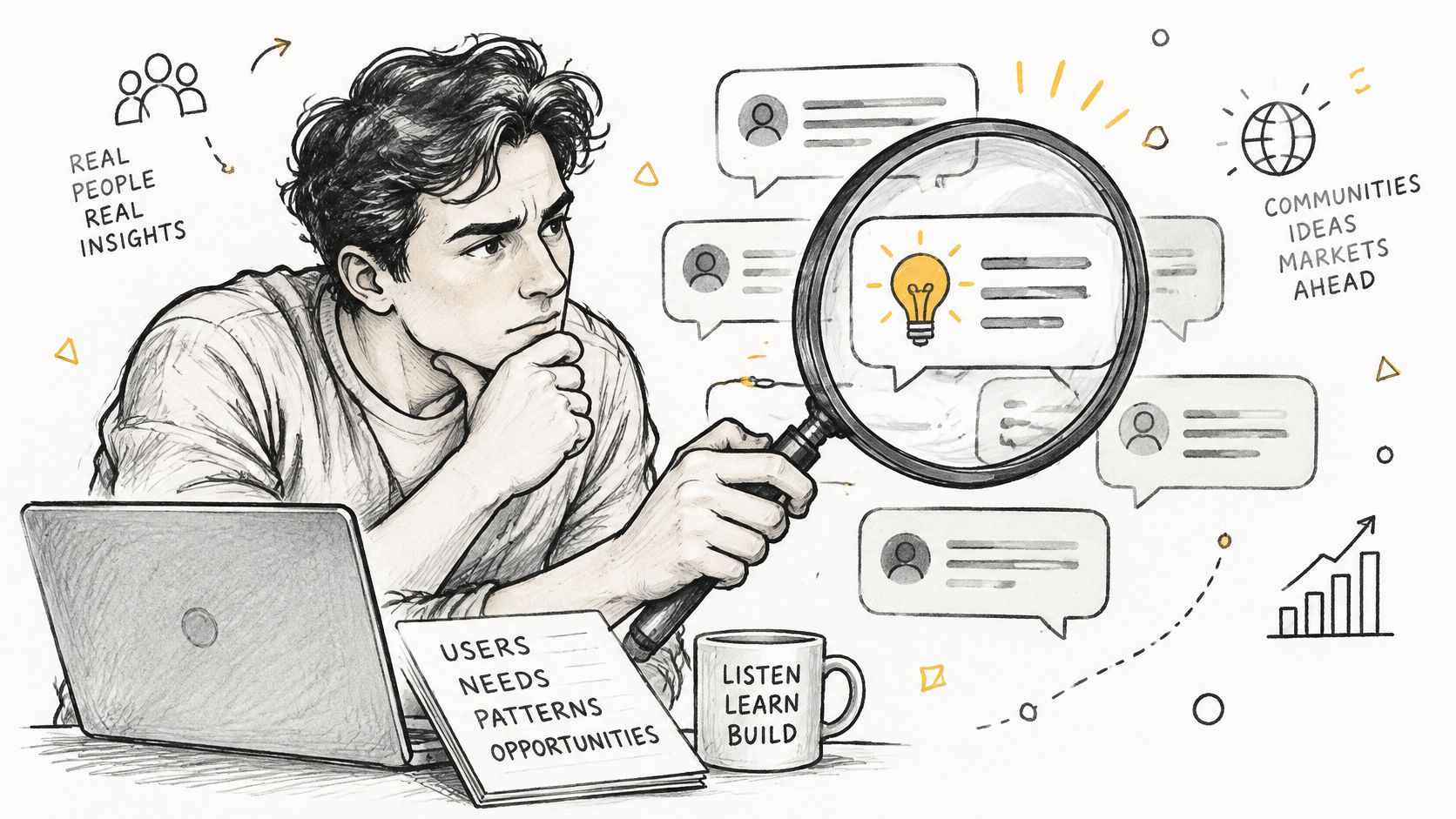
Who pays: an indie founder or small marketing consultant who's tired of manually searching Reddit, Hacker News, forums, and review sites for people describing a problem they can solve. Brand24 and Mention serve broader brand listening, and Google Alerts is the free baseline, but neither is built to rank niche complaints by buying intent.
The product tracks keywords, competitors, and problem phrases, then surfaces posts where someone asks for an alternative, complains about price, or describes a workaround. Say you monitor phrases around invoice chasing for freelancers. Your customer gets a short daily list with links, context, and a suggested reply angle instead of another noisy feed. Reviewing concrete pain-point examples helps you define what counts as a signal before you automate anything.
Cheapest Test and MVP Boundary
- Test it manually: Offer a paid weekly digest for one vertical, such as developer tools or ecommerce, and compile it by hand for two weeks.
- Charge early: If nobody pays for curated signals, better scraping won't fix the offer.
- Stop the MVP here: One source, saved searches, email alerts, and a simple relevance score.
Don't launch with sentiment dashboards or ten integrations. Check platform API terms before you build, because access rules change often and can break your whole data source overnight.
2. Website Uptime and Status Monitoring
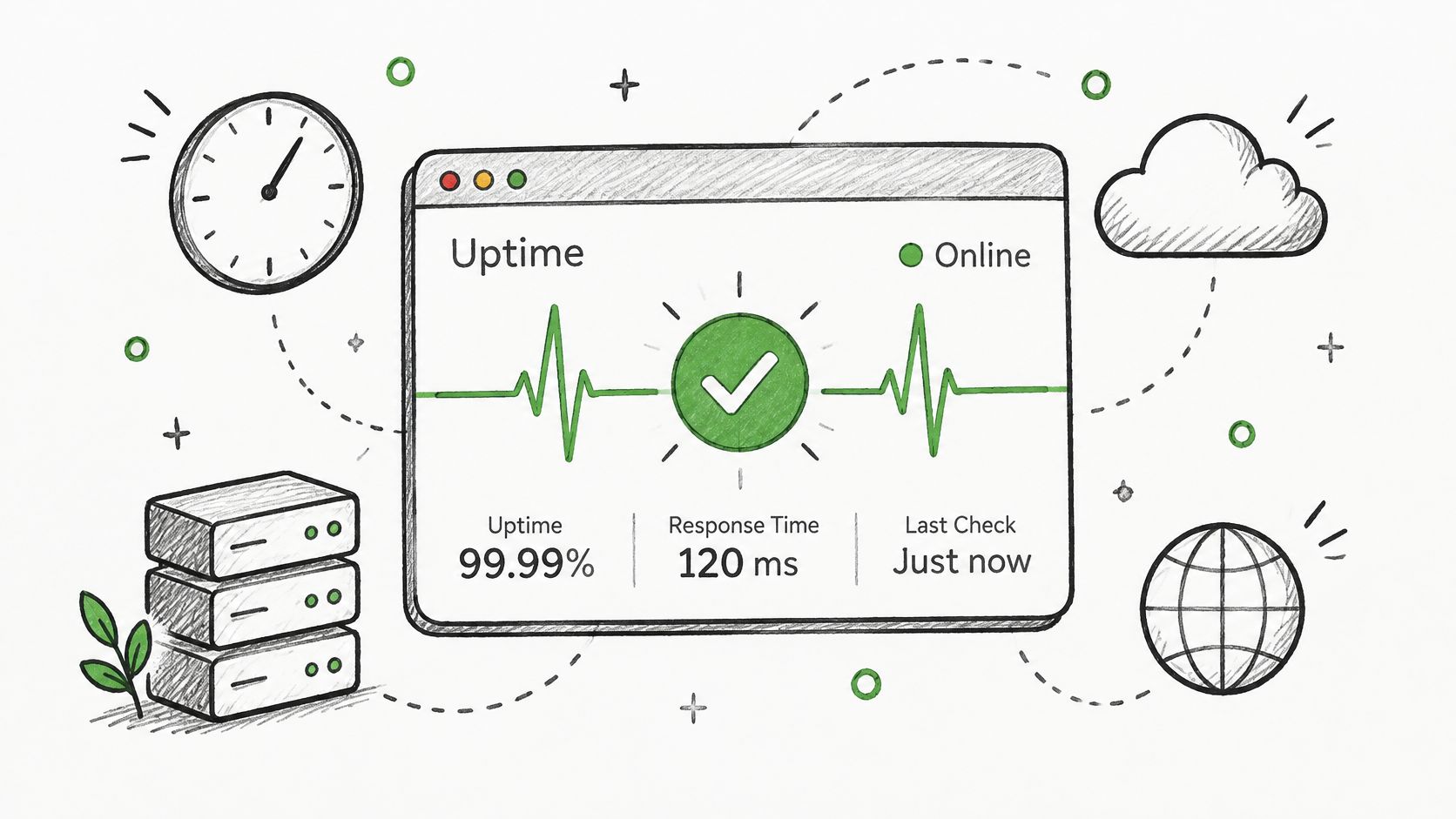
Downtime is one of the few pains a buyer understands without education. Who pays: a small agency managing client sites, a store owner who can't afford silent checkout failures, or a solo SaaS founder who doesn't want customers reporting outages first. UptimeRobot has a generous free tier, Better Stack combines monitoring with incident management, and Pingdom is the older established option.
Your wedge isn't more checks. It's a specific audience. Say a ten-person agency monitors client sites and wants one calm alert in Slack, a branded public status page, and a monthly report it can forward to clients. That buyer doesn't need enterprise observability. They need proof they caught a failure quickly and handled it.
Price per monitor, not per seat. Small teams share alerts, and seat pricing punishes exactly the collaboration you want.
Cheapest Test and MVP Boundary
- Test it manually: Monitor ten prospects' sites with existing tools and send them a real incident or response-time report.
- Sell the outcome: Offer setup plus the first status page before you build fancy escalation rules.
- Stop the MVP here: HTTP checks, keyword checks, email and chat alerts, and a public status page.
Reliability is the product. A missed alert destroys trust faster than a missing chart, so spend your first build time on false-positive handling and clear incident timestamps.
3. Privacy-Friendly Web Analytics
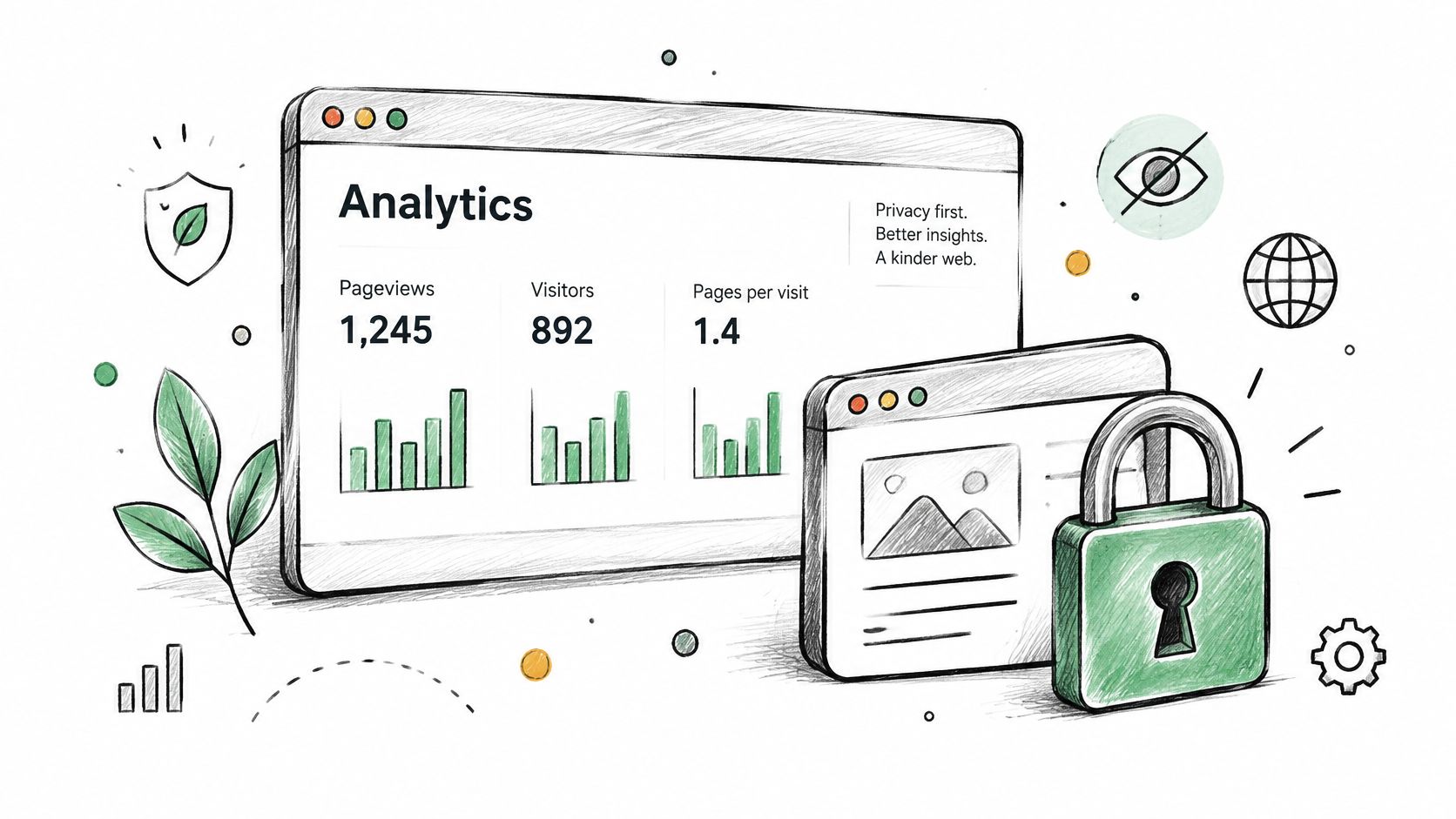
Many site owners want three answers: where visitors came from, what they viewed, and what converted. They don't want a cookie banner, a heavy script, or a dashboard built for a data team. Plausible Analytics, founded by Uku Täht and Marko Saric, Fathom Analytics, and Simple Analytics already prove buyers will pay for simpler, privacy-first reporting.
Who pays: a SaaS founder checking landing-page conversion, a consultant reporting traffic to clients, or a store owner who's uncomfortable collecting invasive personal data. Say a small SaaS team launches pricing experiments weekly. They need pageviews, referrers, campaign tags, and goal completion in one screen they can open before standup.
Cheapest Test and MVP Boundary
Publish a live demo and a plain-English data policy before you chase integrations. Offer concierge installation to five site owners, watch which reports they open, and ask whether they'd keep the script after a paid trial. Trust does the selling here, so your script size, data retention, and export options matter more than decorative charts.
Stop the MVP at one lightweight script, a clean dashboard, custom goals, and email reports. A self-hosted or open-source edition can attract developers later, but it also creates support costs you shouldn't accept until hosted customers pay. Target one niche first, such as Shopify stores or SaaS landing pages, so your default goals and onboarding can speak their language.
4. AI Headshot and Profile Photo Generator
This buyer doesn't want a subscription. They want a credible LinkedIn photo by Friday without booking a photographer. HeadshotPro and ProfilePicture.ai, associated with Danny Postma, and PhotoAI, created by Pieter Levels, show the shape of the offer: upload selfies, choose a style, receive polished portraits for a one-time or credit-based payment.
The generic version is crowded. Your opening is a segment with specific visual expectations. Realtors need friendly exterior shots. Lawyers need conservative office backgrounds. Founders need images that don't look like stock-photo executives. Say a brokerage onboards new agents every month. Sell a team pack with consistent backgrounds, brand colors, and an approval flow, not just another gallery of random portraits.
Here's a practical look at how buyers judge the output before they trust it with a public profile:
Cheapest Test and MVP Boundary
- Test with samples: Build a landing page with before-and-after examples and take prepaid orders you fulfill with existing models.
- Measure acceptance: Ask how many delivered images the buyer would publish.
- Stop the MVP here: Upload guidance, a few proven style packs, delivery, deletion controls, and clear ownership terms.
Don't start with video avatars or unlimited generations. Your costs, refunds, and trust risks rise fast. State image ownership and deletion policies plainly, and make bad-upload rejection part of the product.
5. Testimonial and Social Proof Collection

Small teams know testimonials help them sell. They still collect them through scattered emails, screenshots, and awkward follow-ups. Senja offers collection plus embeddable wall-of-love widgets, while Testimonial.to focuses on text and video collection. The opening for a narrower product is timing and setup for a specific kind of business.
Who pays: a course creator after students finish a module, an agency after a launch, or a SaaS founder whose happiest users never get asked. Say a consultant closes a project and the client praises the result on a call. Your product sends a short request that day, records a video or text reply, gets display permission, and turns it into a widget without design work.
Practical rule: Ask at the moment of success, not during a quarterly marketing cleanup. Memory and enthusiasm fade quickly.
Cheapest Test and MVP Boundary
Run the service manually for three businesses. Write the request, host a simple form, format the replies, and embed them yourself. If they won't pay after seeing a finished wall on their own site, automation won't change the answer.
Stop the MVP at request links, reminder emails, approval controls, and one embeddable widget. A free widget tier can create referrals, but charge for custom branding, video, and imports. Ready-made request templates are essential because most buyers don't fail on display. They fail because they never ask clearly.
6. Changelog, Roadmap, and Feature Request Board
Software users ask the same questions when they can't see what's changed or what's coming. Did you fix that bug? Are you building the integration? Should I renew this month? Canny is widely used for feature requests and roadmaps, while Headway and Beamer focus on release announcements. A solo founder shouldn't rebuild all three categories at once.
Who pays: a small SaaS team with active users but no product marketer. Say a five-person team ships every week and support still gets tickets about features that launched last month. A clean changelog connected to releases reduces those tickets and gives sales something concrete to send prospects.
Developer workflows also need trust, not just generated text. Stack Overflow's 2025 global developer survey reports that 84% of respondents use or plan to use AI tools, yet only 29% of professional developers considered AI outputs accurate enough to trust. That's a useful warning for this category. Automated release notes should link to real commits, issues, and approvals rather than inventing polished summaries.
Cheapest Test and MVP Boundary
- Test it as a service: Turn a team's recent releases into a hosted changelog and measure clicks from their app.
- Sell one workflow: Charge for publishing and notifications before adding voting.
- Stop the MVP here: Markdown editor, embeddable widget, email subscribers, and one repo or issue-tracker integration.
Use your own changelog as the demo. Voting can come second, but don't let a public roadmap become a promise machine your buyers can't control.
7. Subscription Revenue Analytics and Churn Recovery
A subscription founder can tolerate a plain dashboard. They can't tolerate silent failed payments. Baremetrics provides subscription analytics, ProfitWell focused on pricing and churn before its acquisition by Paddle, and Churnkey specializes in cancellation flows. Your best wedge is one provider and one dollar outcome.
Who pays: a Stripe-based SaaS founder who doesn't trust spreadsheet MRR and has no time to chase expired cards. Say a founder connects a read-only key and sees failed payments grouped by reason, a recovery email ready to send, and the amount recovered during the first week. That's easier to value than forty cohort charts nobody opens.
This is also where product discipline matters. Learning to find product-market fit starts with evidence that customers stay and pay, not with adding more metrics. Customer acquisition is already a major founder challenge, cited by 50% of founders in Slush's survey of 1,043 founders, so recovered revenue has a clear owner and budget.
Cheapest Test and MVP Boundary
Offer a paid billing audit using exported Stripe data. Show failed charges, likely recoverable accounts, and the exact dunning sequence you'd run. Convert the audit into a subscription only if the founder sees money at risk.
Stop the MVP at MRR, churn, failed-payment recovery, and win-back email. Use read-only permissions and explain exactly what you access. Don't add forecasting until customers trust your basic numbers against their bank payouts.
8. Scheduling and Booking for Solopreneurs
Generic scheduling is solved. Calendly is dominant, and Cal.com, created by Peer Richelsen and Bailey Pumfleet, gives developers an open-source platform. A new product only works if it owns a booking workflow that generic tools handle clumsily.
Who pays: a therapist who needs intake forms before the first session, a tutor who sells session packs, or a fitness coach who needs waivers, reminders, and reschedule limits. Say a tutor accepts paid trial lessons through one link. The parent picks a time, completes student details, pays, gets reminders in the right time zone, and receives a follow-up task afterward. You're selling fewer no-shows and less admin, not a calendar page.
Creators who sell consultations also care about distribution, which is why adjacent workflow savings matter. A coach who uses templates to speed up social media publishing still loses the sale if booking feels slow or unreliable.
Cheapest Test and MVP Boundary
- Test with one vertical: Set up a manual booking flow for five tutors or coaches and charge for saved admin time.
- Watch the edge cases: Time zones, cancellations, buffer times, and double booking reveal the product.
- Stop the MVP here: One calendar sync, one intake form, payments, reminders, and a shareable link.
I recommend a generous free tier only if every booking page creates referrals. Otherwise, charge from the start. Reliable calendar sync comes before team routing, fancy branding, or marketplace features.
9. Newsletter Platform for Creators and Indie Founders
Writers don't need another marketing suite. They need to write, send, grow a list they own, and charge readers without wrestling with campaigns and segments. Buttondown, created by Justin Duke, serves developers and writers with a minimalist approach. Substack popularized paid newsletters, and ConvertKit, now Kit, serves creators who want automation and sequences.
Who pays: a developer writing to open-source users, an indie founder publishing build updates, or a niche analyst who wants markdown and an API. Say an open-source maintainer publishes release notes from a static site, imports subscribers, offers a paid tier, and exports everything anytime. That buyer pays for control and simplicity, not a drag-and-drop email builder.
Before building, review the economics and ethics of list growth in this guide to startup email marketing. Deliverability is your hidden product. Authentication, bounce handling, complaint handling, and clean sending reputation matter more than a beautiful editor that's attached to unreliable mail.
Cheapest Test and MVP Boundary
Recruit three writers and migrate them by hand. Send their next issues through your prototype, inspect delivery problems with them, and ask what would make switching permanent. If they only praise the editor but won't move their list, you haven't won.
Stop the MVP at markdown editing, subscriber management, paid subscriptions, basic analytics, and full export. Build an API and static-site integrations once your chosen niche asks for them. Don't promise discovery you can't deliver.
How the nine micro SaaS ideas compare on pricing, buyer, and build effort
| Item | Pricing Model | Best For | Build Complexity | Main Risk |
|---|---|---|---|---|
| Market Signal and Pain-Point Monitoring | Free weekly digest; paid subscription | Founders and marketers seeking demand signals | Medium: data collection and relevance filtering | API access costs and false positives |
| Website Uptime and Status Monitoring | Subscription, often per monitor | Businesses and agencies needing reliability alerts | Low to medium | Monitoring service failure or alert costs |
| Privacy-Friendly Web Analytics | Usage-based pricing tied to pageviews | Privacy-conscious site owners and developers | Medium to high | Competition from free analytics tools |
| AI Headshot and Profile Photo Generator | One-time purchase or credits | Job seekers and professionals needing headshots | Medium | Commoditization, provider dependency, and privacy concerns |
| Testimonial and Social Proof Collection | Subscription, potentially with a free tier | Businesses seeking more customer testimonials | Low to medium | Crowded market and low customer response rates |
| Changelog, Roadmap, and Feature Request Board | Subscription or product add-on | SaaS teams sharing updates and prioritizing requests | Medium | Feature overlap and low user engagement |
| Subscription Revenue Analytics and Churn Recovery | Flat monthly fee or share of recovered revenue | Subscription businesses using payment providers | High: integrations and financial data handling | Trust requirements and platform feature overlap |
| Scheduling and Booking for Solopreneurs | Freemium subscription; paid bookings may add fees | Consultants, coaches, and other solo professionals | Medium to high | Calendar API reliability and dominant competitors |
| Newsletter Platform for Creators and Indie Founders | Subscription based on subscriber count | Writers and indie founders | Medium to high | Deliverability challenges and creator churn |
Choosing Your First Micro SaaS to Validate
Don't rank these micro SaaS ideas by which one sounds largest. Rank them by which buyer you can reach this week and which painful outcome you can prove without building a platform. An uptime alert for agencies, failed-payment recovery for Stripe founders, and booking for tutors all have a visible moment of value. A broad dashboard for everyone doesn't.
Start with the discipline we use at Find Startup Idea. Write the problem in one sentence with a real buyer. If you can't name the buyer, the trigger, and the cost of doing nothing, the idea isn't sharp enough. Then confirm the buyer wants software and tolerates recurring billing, rather than a one-time service you keep delivering manually.
Put up a landing page with Stripe checkout for a paid waitlist and spend $50 to $150 on ads or targeted outreach to strangers. Friends and coworkers don't count. The signal I want is 10 strangers paying anything inside 14 days. Below that, change one variable, such as the niche or the promised outcome, and test again. If the second test stalls, move on instead of adding features to a product nobody requested.
The long-term odds justify that strictness. In OECD cross-country evidence on start-up survival, the average survival rate for new firms was just above 60% after three years and about 50% after five years. These aren't micro SaaS failure rates, but they remind you that retention and cash flow belong inside the idea from day one.
A Two-Week Decision You Can Actually Make
- Days 1 to 2: Interview buyers and write the one-sentence problem.
- Days 3 to 5: Publish the offer, price, and paid waitlist.
- Days 6 to 14: Drive stranger traffic, fulfill promises manually, and count payments.
- Day 14: Build, iterate on one variable, or move on.
Browse more than 1,000 ideas sourced from real Hacker News and Reddit pain points when you need sharper starting points. Save the ones you'd put your name on, and the site generates a launch prompt for each. Category browsing also helps you compare nearby options, including micro SaaS concepts for freelancers, without treating every trend as an opportunity. Pick one buyer, one painful trigger, and one paid test. That's enough for your first real answer.
Find Startup Idea gives you a library of more than 1,000 startup ideas sourced from real Hacker News and Reddit pain points, plus a six-step, 14-day SaaS validation playbook for testing before you build. Pick one micro SaaS concept, save the ideas you'd put your name on to generate a launch prompt, and start your paid waitlist test at Find Startup Idea.