10 Online Communities for Entrepreneurs to Join in 2026
Discover the best online communities for entrepreneurs, from Indie Hackers and Hacker News to paid peer groups, with use cases and joining tips.
You're probably in the same place a lot of founders get stuck, with too many tabs open and not enough honest feedback. One community tells you your idea is exciting, another says it's too early, and a third is full of people selling frameworks you don't need. The question that matters isn't where the biggest crowd is, it's which online communities for entrepreneurs will help you validate, launch, find a co-founder, stay accountable, or get warm introductions without wasting weeks. This list starts with open forums and moves toward curated, paid, and application-based networks, so you can match the room to your stage instead of chasing a name. If you want a broader lesson on how founder communities compound over time, this Founder Connects startup community piece is a useful companion read.
Table of Contents
- 1. Indie Hackers
- 2. Hacker News by Y Combinator
- 3. r/Entrepreneur
- 4. r/startups
- 5. Product Hunt Forums
- 6. Y Combinator Startup School
- 7. The Fastlane Forum
- 8. MicroConf Connect
- 9. Founders Network
- 10. Startup Grind Membership
- Top 10 Online Entrepreneur Communities Comparison
- Choose Two Communities and Commit for 90 Days
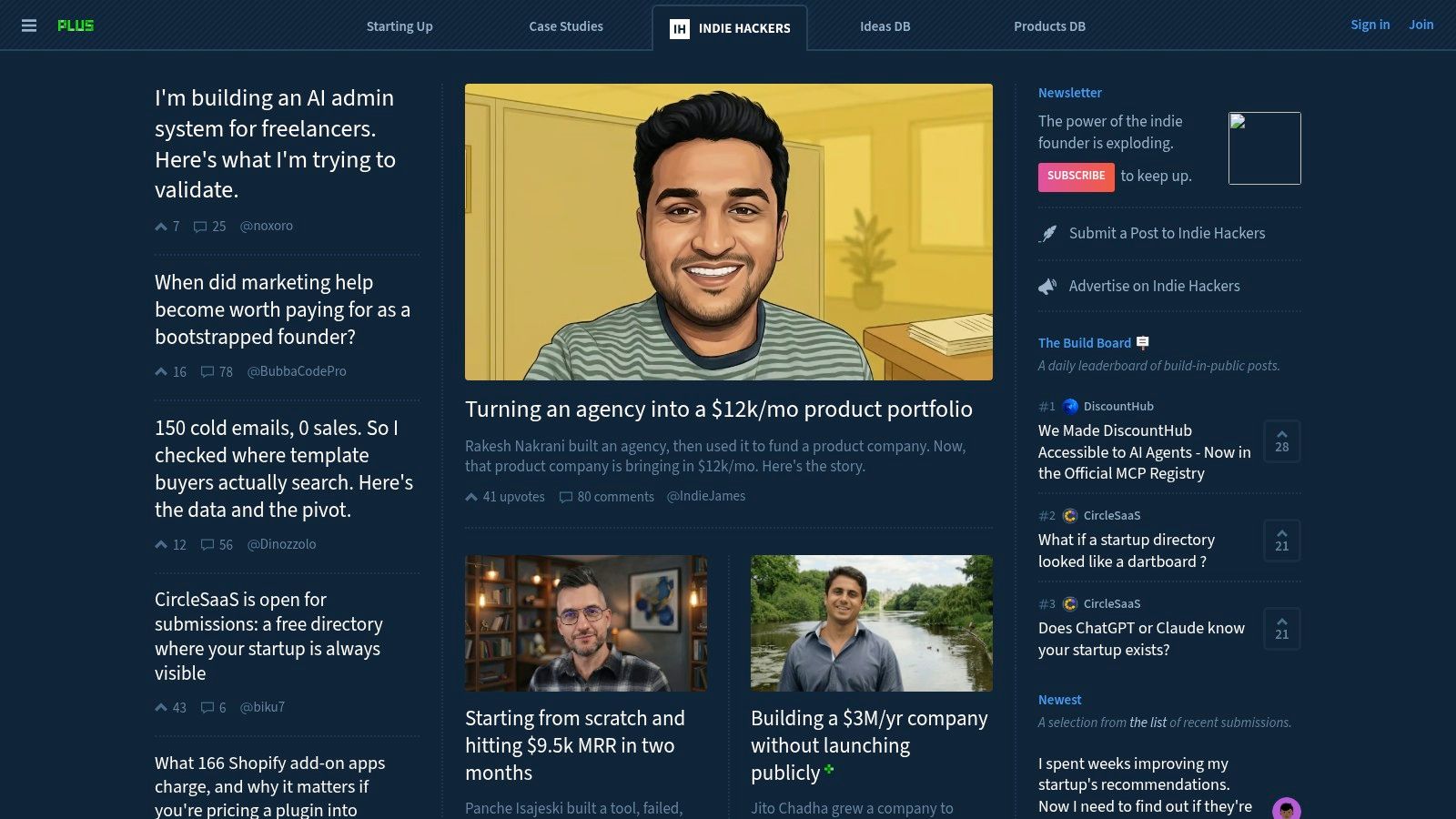
1. Indie Hackers
Indie Hackers works best when you already have something to show and want blunt feedback from other founders. It fits idea validation, launch feedback, co-founder search, peer accountability, and early growth conversations, but each use case calls for a different approach. The main forum is broad. The smaller Groups and Peer Groups are better when you need tighter context and less noise.
How to join without wasting time
Read a few recent threads before you post. The strongest ones are specific, pricing questions, traffic experiments, launch recaps, or customer pain points. If you are still shaping the problem, pair the community with customer discovery interviews so you are not asking the forum to do your research for you.
The trade-off is simple. It is free, active, and broad enough to reveal patterns fast, but the signal depends on how clear your post is and how much context you give. Lurkers usually get less value than people who contribute often.
If your build-in-public posts start attracting traction, this is also a good moment to hire developers from latin america so you can ship faster without raising.
Practical rule: post one concrete decision, one constraint, and one question. That gets better replies than a long founder story.
Best for
- Idea validation, because you can test positioning quickly
- Launch feedback, especially for bootstrapper and SaaS offers
- Peer accountability, when you join themed groups instead of staying in the main feed
What it requires
- Free access, no application
- Active participation, if you want visibility
- A real problem, not a polished pitch
2. Hacker News by Y Combinator
If you have a technical product and need blunt feedback, Hacker News is one of the few open forums that will tell you quickly whether your idea has real traction. Show HN fits launches and demos. Ask HN works better when you need specific advice from engineers, operators, or senior technologists. For founders at the validation or early launch stage, it is a hard room, but a useful one.
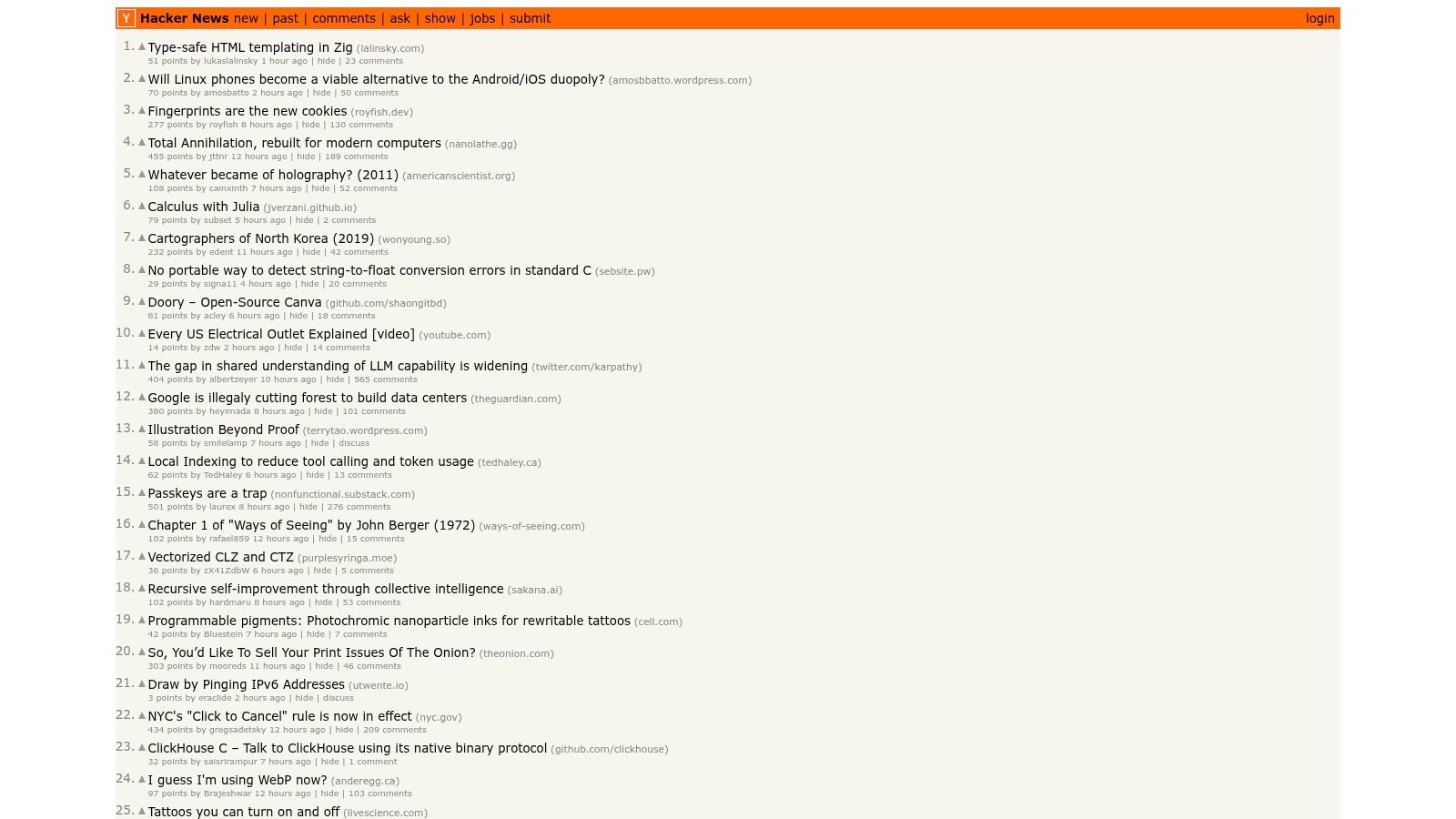
What matters here is not polish. A working product, a clear explanation, and a direct request for feedback usually beat branding and hype. If the post is vague, the audience will strip it apart. If the demo is real, the critique can help you improve the product fast.
Use it for launch feedback or early user discovery. It is not built for warm encouragement, and that is part of the trade-off. The upside is access to a technical audience that can spot weak positioning, missing details, and rough edges in minutes.
Joining is simple, but using it well takes restraint. Read a few recent threads, post something concrete, and ask one specific question. If you are still shaping the problem, do that research first and come here once you have something people can actually judge.
Practical rule: ship first, then post. Hacker News responds to something people can inspect, not to a promise of what you may build later.
Best for
- Technical founders with a demo or live product
- Launch feedback from a skeptical audience
- Early users who care about builder-grade tools
What it requires
- No fee
- No application
- A real artifact, usually a demo or working product
3. r/Entrepreneur
A founder can use r/Entrepreneur to sanity-check an offer before spending more time on it. The subreddit is broad and heavily moderated against promotion, so the discussion stays closer to operator talk than self-promotion. Weekly threads like Mentor Monday and Feedback Friday give you a cleaner place to ask for input without forcing a normal question into a pitch.
The best use case is early-stage idea validation and offer testing. It helps you see whether your positioning sounds believable to other business owners, and whether a pain point sounds real outside your own head. It also works for second opinions on funnels or customer messaging. The audience is global, though it still skews heavily toward the U.S., so treat the feedback as input, not market truth.
The trade-off is uneven quality. Some replies are sharp and practical, others are just one person's experience. Use it to widen your view, then check anything important against your own customers or market.
If you post here, keep it tight. Ask one clear question, avoid promotional language, and read a few recent threads first so you understand the tone.
Best for
- Early idea checks
- Offer and funnel feedback
- General operator perspective from a large audience
What it takes
- Free participation
- Rule-aware posting
- Low tolerance for promotional language
4. r/startups
A founder usually turns to r/startups for sharper startup feedback than a general entrepreneur forum can give. The subreddit is built around fundraising, traction, product execution, and the messy middle where a company has momentum but still needs outside judgment. Weekly Ops, Fundraising, Feedback, and Successes threads keep the discussion practical, while Share Your Startup gives you a controlled place to mention what you are building without turning the whole subreddit into an ad.
Use it when you need to pressure-test a deck, a milestone plan, or a traction narrative. It works best once the startup already has a clear shape. The trade-off is that the advice tends to focus on startup mechanics, so it is less useful for raw idea hunting or broad customer discovery.
Join by reading recent threads first, then post one specific question. Keep the ask narrow. If you are still deciding whether the underlying problem is real, pair the subreddit with pain points examples so you can separate real demand from optimism.
One post should answer one decision.
Best for
- Startup validation
- Fundraising reality checks
- Milestone pressure-testing
What it requires
- Following the weekly thread structure
- No loose self-promotion
- Checking advice against your own customer evidence
Open r/startups
5. Product Hunt Forums
A founder who has already planned a launch can use Product Hunt Forums to keep the conversation going after launch day. The space is built for questions, AMAs, and product discussion, so it suits founders who want to extend attention beyond the initial spike. Used well, it turns a short burst of visibility into a place where users can keep replying, asking, and sharing feedback.
The fit is strongest for product marketing and early user discovery. People there already speak in product terms, so you can discuss a half-finished tool without spending time explaining the basics. The trade-off is attention. A weak post can fade fast, and visibility still rises and falls with broader Product Hunt activity.
I would use it if you are willing to answer in public and treat the forum as part of the product's community layer. If you only show up for traffic, people notice that quickly. If you respond candidly and give useful context, the forum can support launch follow-up, customer learning, and ongoing community building around the tool.
Best for
- Launch follow-up
- Product marketing
- Ongoing community building around a tool
What it actually requires
- A visible product or clear concept
- Value-first posting
- Consistency, not one-off promotion
6. Y Combinator Startup School
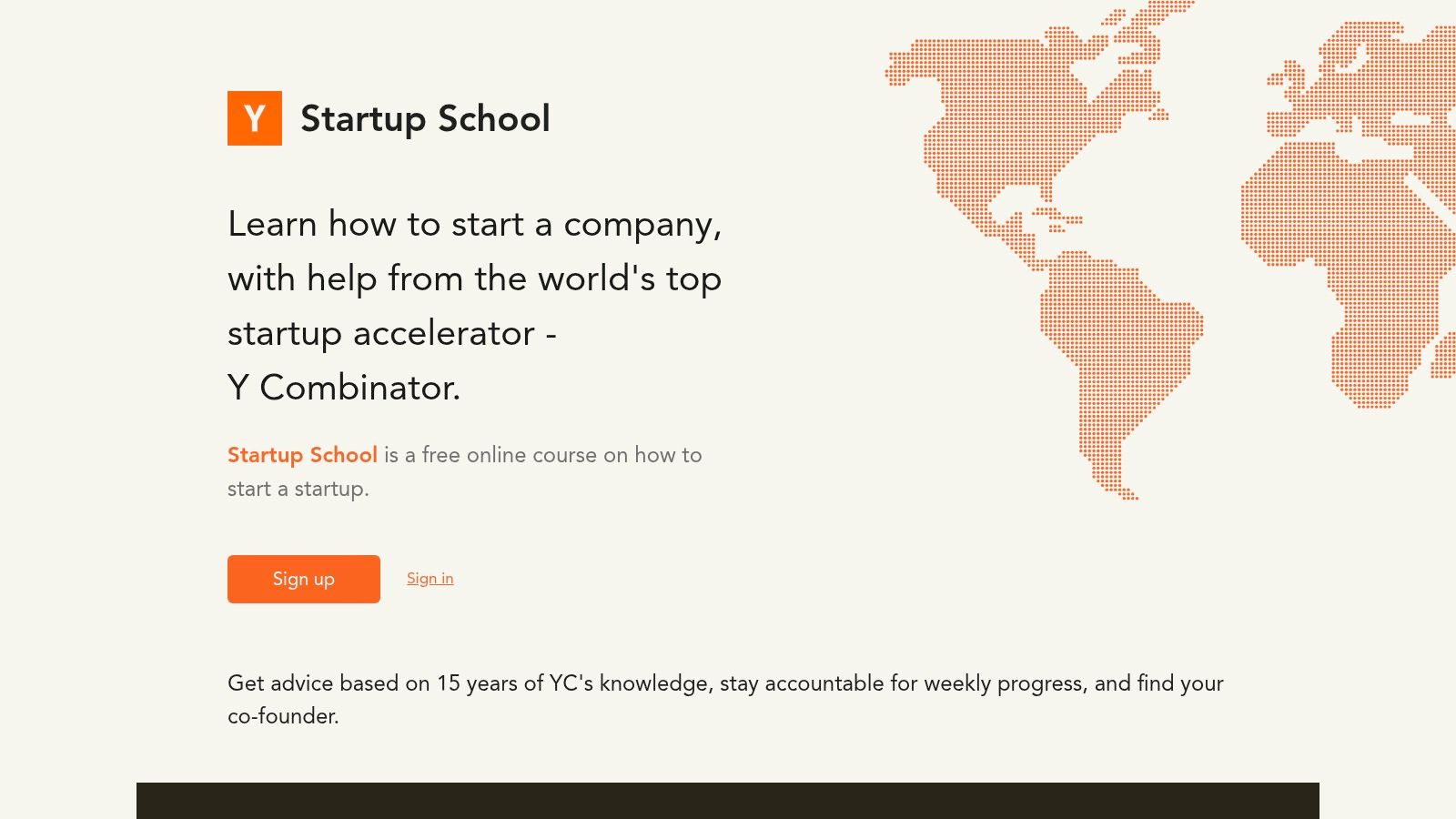
A founder testing an idea can use Startup School to learn the basics without paying for a heavier community first. The mix of free curriculum, community access, co-founder matching, and clear behavior rules makes it a practical place to compare ideas, meet early collaborators, and keep conversations useful.
Where it fits
Startup School is strongest for co-founder search and early idea formation. It is less useful if you want advanced operator advice or a fast stream of hot takes. The structure matters. You get a cleaner environment than a loose forum, which helps when you are still deciding whether an idea is worth pursuing.
Before you start reaching out, make your position clear. A simple business model slide helps you explain what you are building, what needs testing, and why a co-founder should care.
The join path is straightforward, but the work still falls on you. Best for
- Co-founder search
- Early idea formation
- Learning while you build
What it requires
- Free access
- Proactive outreach
- A willingness to message and follow up
7. The Fastlane Forum
A founder with a service business, a niche product, or a plan that should survive channel shifts will get more from The Fastlane Forum than from a hype-driven startup room. The archive is deep, and the culture rewards execution. That makes it useful for blunt advice about ownership, distribution control, and business models that do not fall apart when a platform changes the rules.
What stands out
The forum is strongest when you need pushback on how a business really works, not encouragement. Members tend to focus on cash flow, customer dependence, and whether a model can hold up without borrowed momentum. The older interface means discovery takes more effort than on newer communities, so you should expect to search before you post.
If your growth relies on one algorithm, one marketplace, or one ad channel, this is a useful place to test weak spots. Ask what happens if fees rise, if the channel dries up, or if your best source of demand disappears. Those questions are less comfortable than growth tips, but they are usually more useful.
Practical rule: use this forum for hard questions about durability, not applause for growth hacks.
Best for
- Resilient business models
- Ownership-focused discussion
- Execution and accountability
What it requires
- Time spent reading the archive
- Tolerance for direct feedback
- A willingness to discuss trade-offs
8. MicroConf Connect
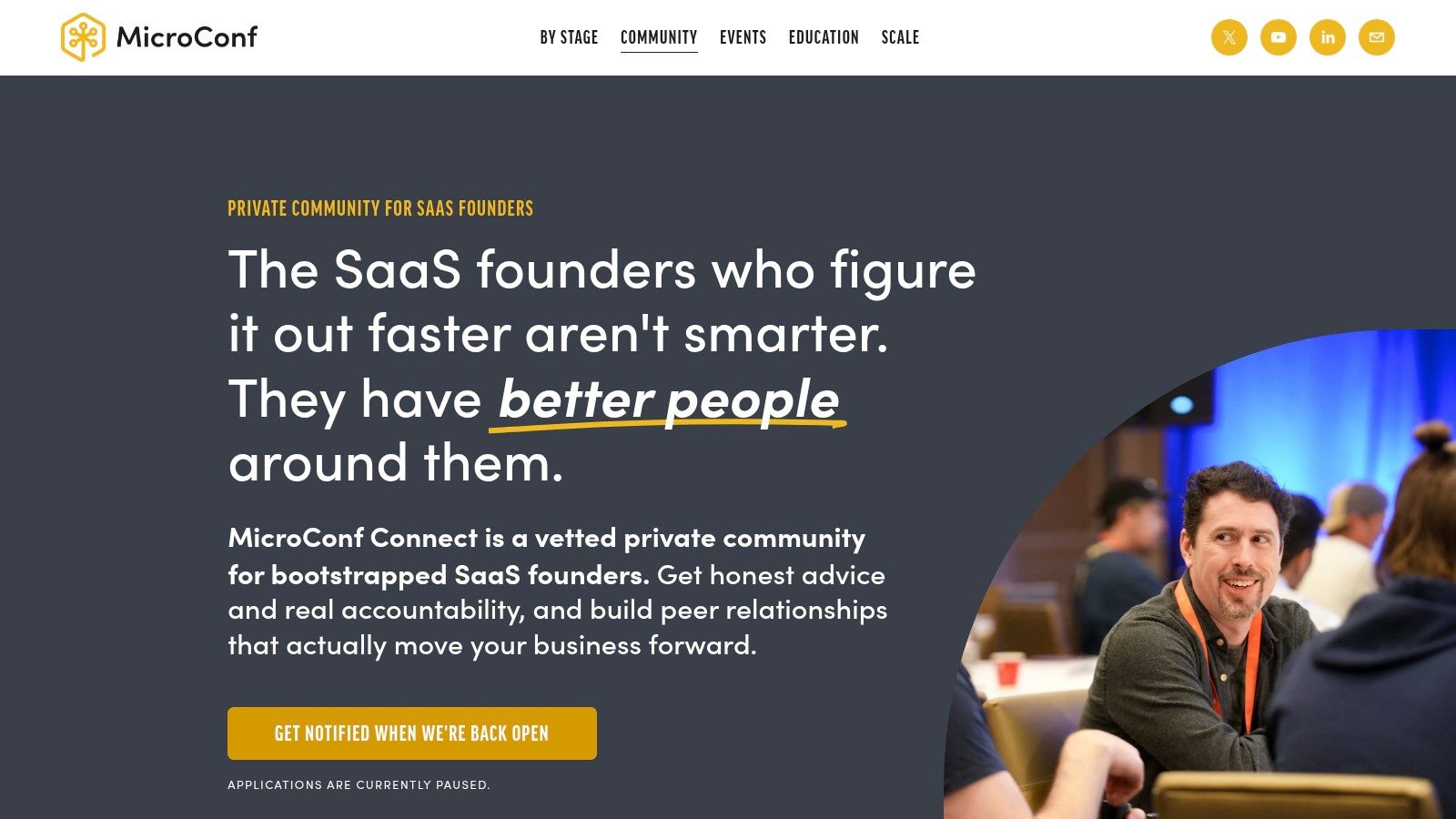
A bootstrapped SaaS founder who needs blunt feedback on pricing or retention will get more from MicroConf Connect than from a general startup forum. The community is organized by revenue stage and topic, so the room you join is usually closer to the problem you are facing. It also includes expert sessions, a searchable directory, and a content vault with a deep back catalog of MicroConf talks.
Where it fits
For idea validation, it is not the first stop. For launch feedback, peer accountability, and post-launch decisions, it fits much better. The pitch-free culture usually means fewer vendor takes and more useful pushback, especially if you want to pressure-test product choices or retention problems with people who have already lived through them.
It is application-based and paid, so the join route matters. If you only want to read without contributing, the value will be thin. If you are willing to participate, ask direct questions, and help other founders work through their own problems, the stage-matched format can pay off.
You are not paying for content alone. You are paying for fit, and fit only matters if you use the room.
Best for
- Peer accountability
- Bootstrapped SaaS advice
- Stage-matched support
What it requires
- Application approval
- Paid membership
- Regular participation to get value
9. Founders Network
If you are past idea mode and need a vetted room for real founder conversations, Founders Network fits that stage well. It is aimed at tech founders who want mentorship, warm introductions, and fewer vendor pitches. The Membership Committee makes it feel more structured than an open forum, and the partner perks sit beside the community rather than replacing it.
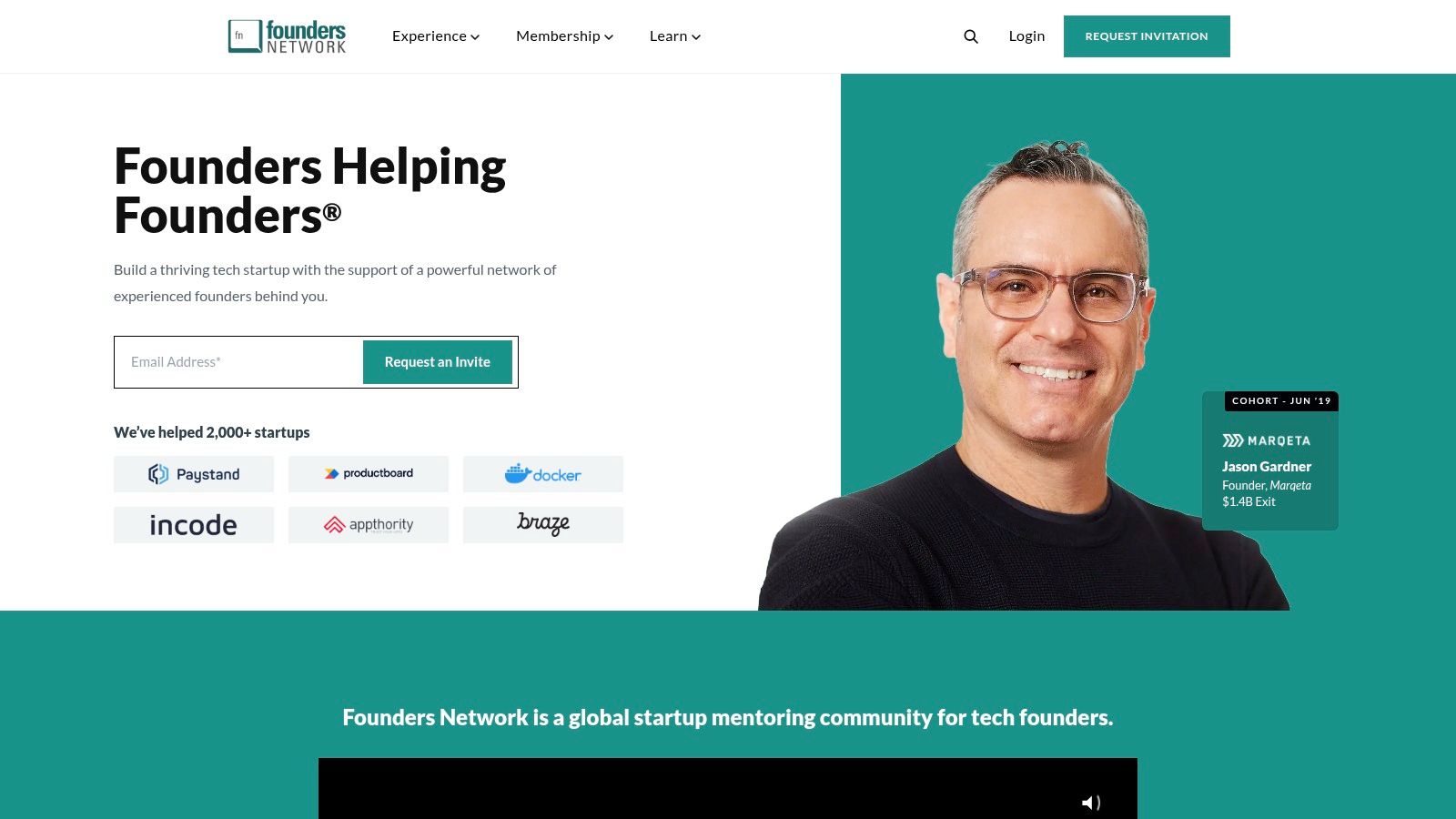
Apply here if your goal is warm introductions, structured mentorship, or access to founders who have already been screened. It is also useful for deals, hires, and expert matching, especially when you already know the kind of help you need. The trade-off is simple, the value depends on how actively you use it.
The price is shared after approval, so the application is part of the decision process. Treat that step as a filter, not a formality. Be clear about what you want from the network before you apply, and judge whether the room matches your current stage.
Best for
- Warm introductions
- Structured mentorship
- Vetted founder access
What it requires
- Application approval
- Paid membership after approval
- Proactive participation
10. Startup Grind Membership
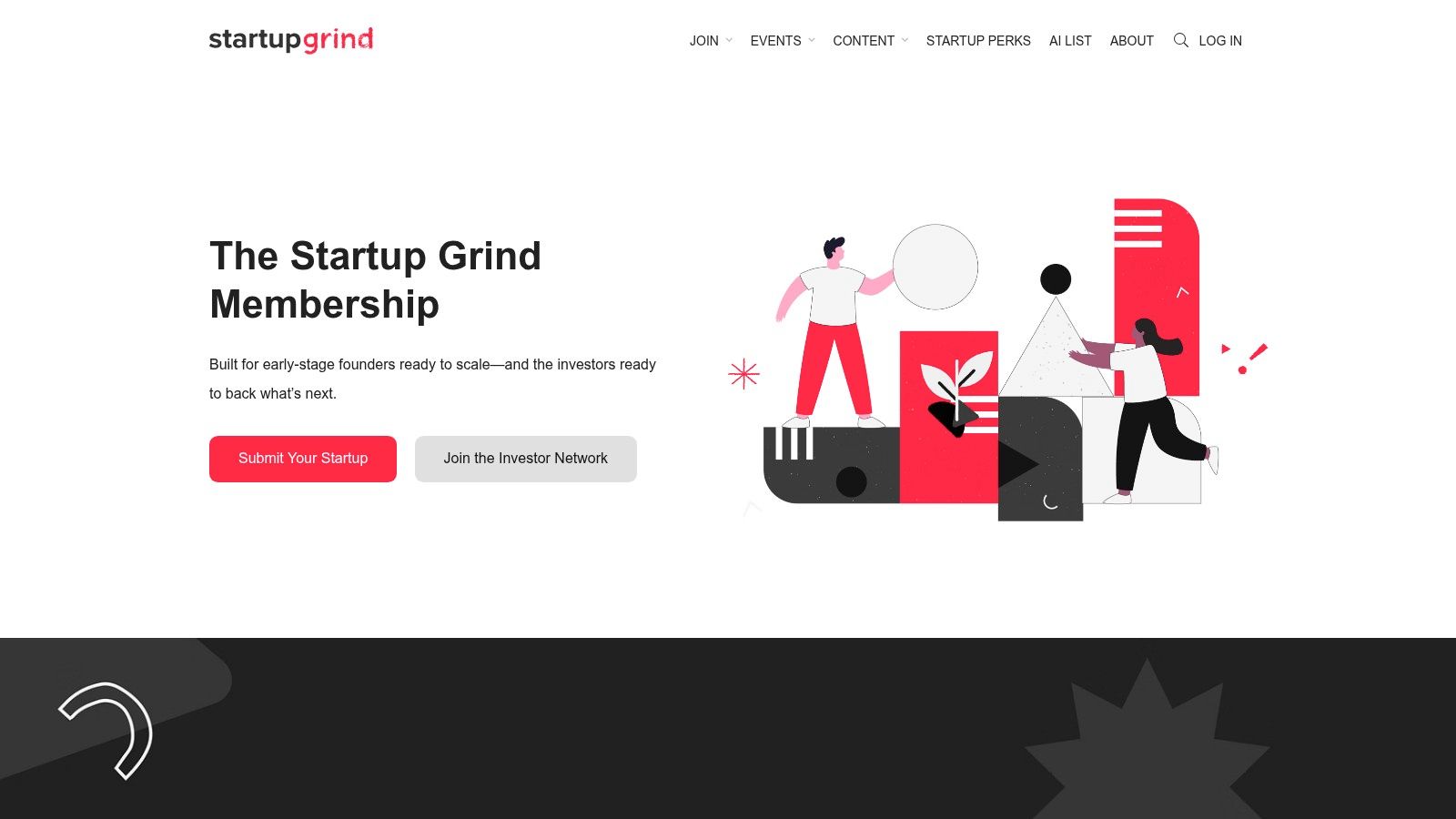
A founder who wants offline access as much as online discussion will get more from Startup Grind Membership than from another open Slack. The mix of local events, a member directory, founder-only workshops, and investor-facing programs makes it better suited to warm introductions, fundraising conversations, and relationship building than to quick anonymous advice. Its value also depends on whether there is an active chapter near you.
What to expect before you apply
Access is application-based, and pricing is not public. That makes it a curated network, not a casual add-on. In practice, that means you should be ready to show why you belong and what you want from the room.
The trade-off is simple. If your goal is warm introductions or investor feedback, this can be a good fit. If you mainly want fast opinions or a place to post without showing your name, a free forum will be easier and faster. The network works best when you attend events, use the directory, and stay visible in the community instead of waiting for results to come to you.
Best for
- Warm introductions
- Fundraising and investor feedback
- Global founder networking
What it actually requires
- Application-based access
- Unlisted pricing
- Real participation in events and community spaces
Explore Startup Grind Membership
Top 10 Online Entrepreneur Communities Comparison
| Community | ✨ Core features | ★ Quality/Signal | 💰 Price / Value | 👥 Target audience | 🏆 Best for |
|---|---|---|---|---|---|
| Indie Hackers | Active forum, themed Groups, build-in-public, founder interviews | ★★★☆☆ | 💰 Free | 👥 Bootstrapped founders, indie makers | 🏆 Idea validation & early traction feedback |
| Hacker News (YC) | Show HN, Ask HN, strict moderation | ★★★★☆ | 💰 Free | 👥 Engineers, founders, investors | 🏆 High-impact launches & thoughtful feedback |
| r/Entrepreneur (Reddit) | Weekly mentor/feedback threads, no-promo rules | ★★★☆☆ | 💰 Free | 👥 Aspiring & everyday entrepreneurs | 🏆 Sanity checks & practical operator advice |
| r/startups (Reddit) | Weekly themed threads (Fundraising, Ops), share thread | ★★★☆☆ | 💰 Free | 👥 Venture-style founders, early-stage startups | 🏆 Fundraising & traction reality-checks |
| Product Hunt Forums | Topic/product forums, maker AMAs, launch pairing | ★★★☆☆ | 💰 Free | 👥 Makers, early adopters, PMs | 🏆 Sustaining Product Hunt launch momentum |
| Y Combinator Startup School | Free curriculum, co-founder matching, community guidelines | ★★★★☆ | 💰 Free | 👥 Early founders, co-founder seekers | 🏆 Structured learning & co-founder matching |
| The Fastlane Forum | Deep archive, execution-focused threads, private messaging | ★★★★☆ | 💰 Free/low-cost | 👥 Owner-operators, bootstrappers, FI seekers | 🏆 Execution playbooks & long-form archives |
| MicroConf Connect | Stage-matched channels, expert sessions, content vault | ★★★★☆ | 💰 Paid ($49/mo or $499/yr) | 👥 Bootstrapped SaaS founders | 🏆 High-signal SaaS peer support & accountability |
| Founders Network | Vetted membership, cohort admissions, mentorship & perks | ★★★★☆ | 💰 Paid (post-approval) | 👥 Tech startup founders seeking mentors | 🏆 Warm intros & structured mentorship |
| Startup Grind Membership | Curated Slack, investor office hours, events & perks | ★★★★☆ | 💰 Paid (application-based) | 👥 Global founders, network-seeking | 🏆 Local & global networking + investor access |
Choose Two Communities and Commit for 90 Days
Joining every community on this list dilutes attention and rarely pays off. Pick one open forum for feedback and one structured or curated network that matches your stage, then show up consistently for three months before you decide whether it's working. If you're still deciding what to build, Find Startup Ideas surfaces ideas from real Hacker News and Reddit pain points, which makes it easier to enter these communities with a problem that people clearly recognize. The bigger win isn't being everywhere, it's getting a few strong reads from the right rooms and turning them into better decisions. For a practical guide to building the kind of community people return to, this SubmitMySaas community guide is worth a look.
If you want startup ideas that are grounded in real founder pain instead of generic trend lists, Find Startup Idea is built for that. It helps you spot problems worth testing, then pressure-test them in the same communities covered above. Visit it when you're ready to stop guessing and start building around what founders are asking for.