10 Startup Ideas for Developers: What to Build in 2026
Explore 10 startup ideas for developers in 2026, each with technical feasibility, recommended stacks, MVP scope, and monetization paths.
Build something you'd use is incomplete startup advice. You can solve your own engineering annoyance, ship polished software, and still discover that everyone else is happy with a free script. A useful tool isn't automatically a business.
The harder question is who loses money, time, or customers when the problem stays unsolved. An engineering manager might pay to shorten onboarding. A platform lead might pay to prevent unsafe deployments. A developer who occasionally dislikes their documentation probably won't buy another subscription without a stronger reason.
Adding AI doesn't fix that gap. In Stack Overflow's developer survey, security or privacy concerns ranked as the leading reason developers rejected a technology, while lack of AI ranked last. Build around a costly workflow, not a fashionable feature.
Buying test: Identify the person who owns the problem, the workaround they use, and the event that would make them replace it.
The strongest startup ideas for developers have a bounded first version, a reachable buyer, and a result you can demonstrate without replacing the customer's entire stack. That might mean checking API contracts rather than building an API platform, or finding stale feature flags rather than operating a global release service.
Each opportunity below can start with a small team, provided you respect its technical limits. Before choosing a stack, choose the narrow problem you can validate with strangers.
1. Developer Documentation Platform
An API customer copies a sample request, gets an authentication error, and opens a support ticket. The documentation exists, but it doesn't match the deployed API. That's a better starting problem than making documentation prettier.
Build for API teams that need versioned, testable documentation. ReadMe, Mintlify, Swagger UI, and Redocly are useful reference points, but copying their feature lists would leave a small team with too much work and no clear distinction.

Start with documentation that stays correct
Use Next.js, TypeScript, PostgreSQL, and an OpenAPI renderer. Store guides in Git, generate reference pages from schemas, and run sample requests against a dedicated sandbox. Keep production credentials out of the browser and your build logs.
The bounded MVP is hosted OpenAPI documentation with version selection, search, and checks that detect broken examples. Leave GraphQL, collaborative editing, and custom sandbox infrastructure for later.
- Buyer and revenue: Sell a workspace subscription to API product owners, with paid private documentation and approval workflows.
- Technical trade-off: Rendering is manageable. Authentication, schema drift, and keeping examples executable require more care.
- Cheap validation: Find complaints about outdated API docs on Hacker News or Reddit, then offer a manual documentation audit and ask whether the team will pay for recurring checks.
Compare broader business opportunity ideas by the same standard: a visible problem and a buyer who already deals with its consequences. Don't mistake positive comments about your design for demand.
2. Feature Flag and Progressive Delivery Service
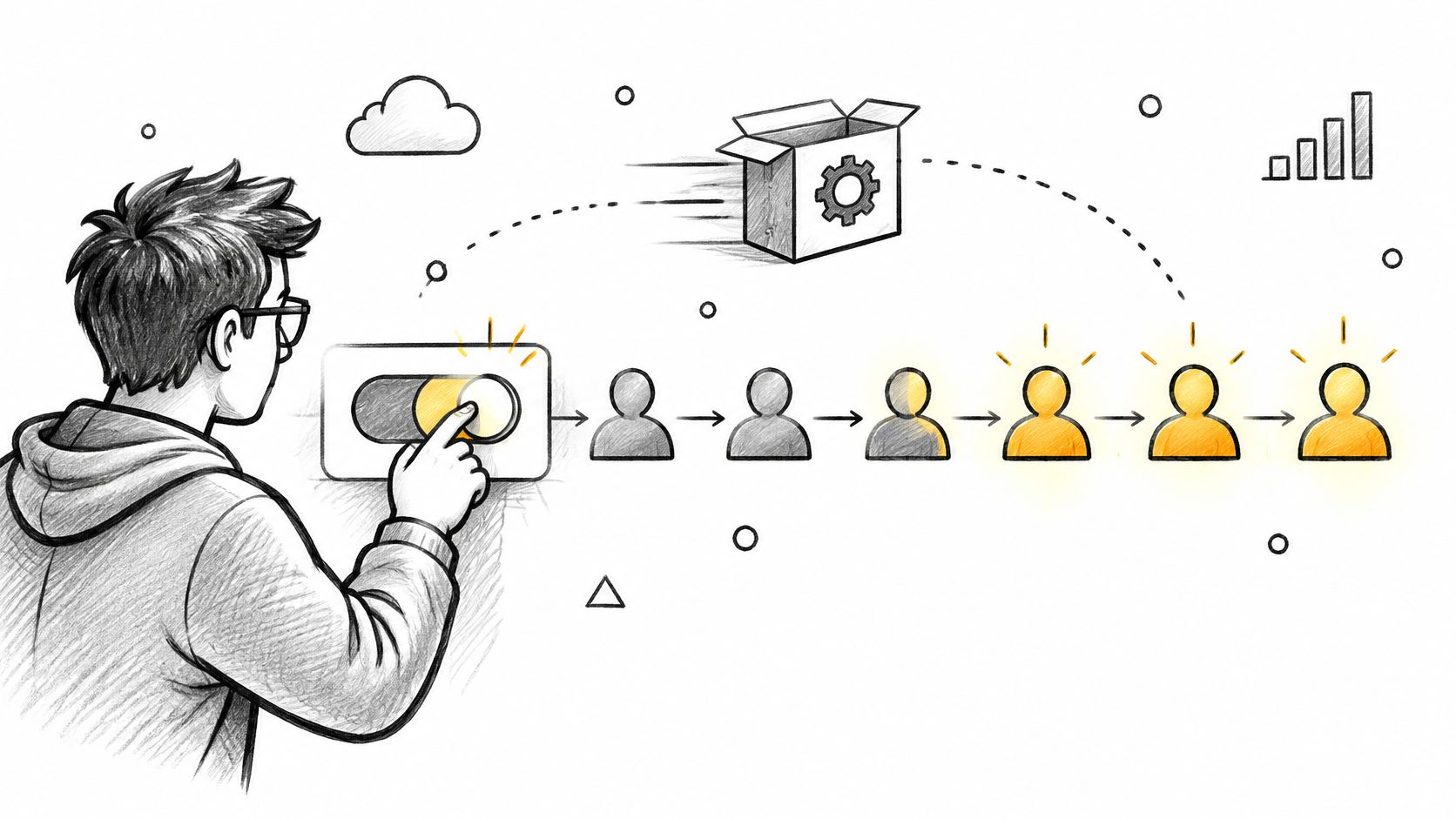
A feature-flag service looks simple until customers depend on it during an incident. If evaluating a flag requires a healthy connection to your servers, you've inserted yourself into their application's failure path.
Start beside the release system, not inside its critical path. LaunchDarkly, Unleash, and Flagsmith give you concrete products to compare against. A more realistic entry point is flag ownership, expiration tracking, and cleanup recommendations.
For example, a SaaS team finishes rolling out a billing screen but leaves the old implementation behind. Your tool identifies the permanent flag, finds references, and prepares a removal pull request.
- Starter stack: Use TypeScript, PostgreSQL, a GitHub App, and language-aware parsing with Tree-sitter.
- Bounded MVP: Import flag metadata from an existing provider, connect repositories, and report flags that appear ready for removal.
- Monetization: Charge engineering teams by connected repositories or workspace, with auditable cleanup history as a paid capability.
Earn the right to manage releases
If you later add runtime evaluation, use locally cached configurations and deterministic assignment. Define what happens when configuration delivery fails, and distinguish a safe default from a stale value.
Validate before building by reviewing a prospect's flag export and searching its repository with permission. Deliver a cleanup report manually, then ask for a paid recurring pilot. A team that won't act on accurate cleanup recommendations may not need another flag dashboard.
3. Error Monitoring and Application Performance Tool
Don't build a smaller Datadog. Build a diagnostic tool for a failure that a specific engineering team struggles to explain.
A useful niche might be background-job failures in Rails applications. Capture the exception, deployment revision, job arguments after redaction, and retry history. Group repeated failures so the on-call engineer sees a reproducible problem rather than an inbox full of alerts.
Sentry, Honeycomb, and Rollbar are useful comparison products. Your opportunity needs to be narrower than collecting exceptions and displaying charts.
Separate diagnosis from data storage
Use an OpenTelemetry collector, a Go ingestion service, ClickHouse, and object storage. PostgreSQL can hold account settings, alert rules, and billing metadata. Support a carefully chosen integration rather than accepting every telemetry format immediately.
The MVP should ingest exceptions and relevant spans, group related failures, and connect them to releases. Skip session replay and unrestricted log search until customers demonstrate that those features are necessary.
The hard part isn't drawing a trace waterfall. It's collecting enough context to explain a failure without collecting secrets or creating an unaffordable storage bill.
Charge the engineering lead a subscription with explicit ingestion and retention limits. Usage-based overages can cover variable costs, but buyers need a way to cap spending.
For validation, ask teams for sanitized incident timelines and produce a manual diagnostic report. Test whether your proposed context would have changed the investigation. Complaints about alert volume alone aren't enough, buyers must prefer your diagnosis to tuning their current tool.
4. Internal Developer Portal
An engineer needs to change a service but can't find its owner, deployment instructions, or production dashboard. A portal can solve that problem, provided someone maintains the underlying information.
Cloud-native adoption supplies relevant context: 89% of respondents had adopted cloud-native techniques to some degree, according to the CNCF Annual Survey 2024. That doesn't prove demand for your portal, but it supports investigating teams coordinating services across cloud environments.
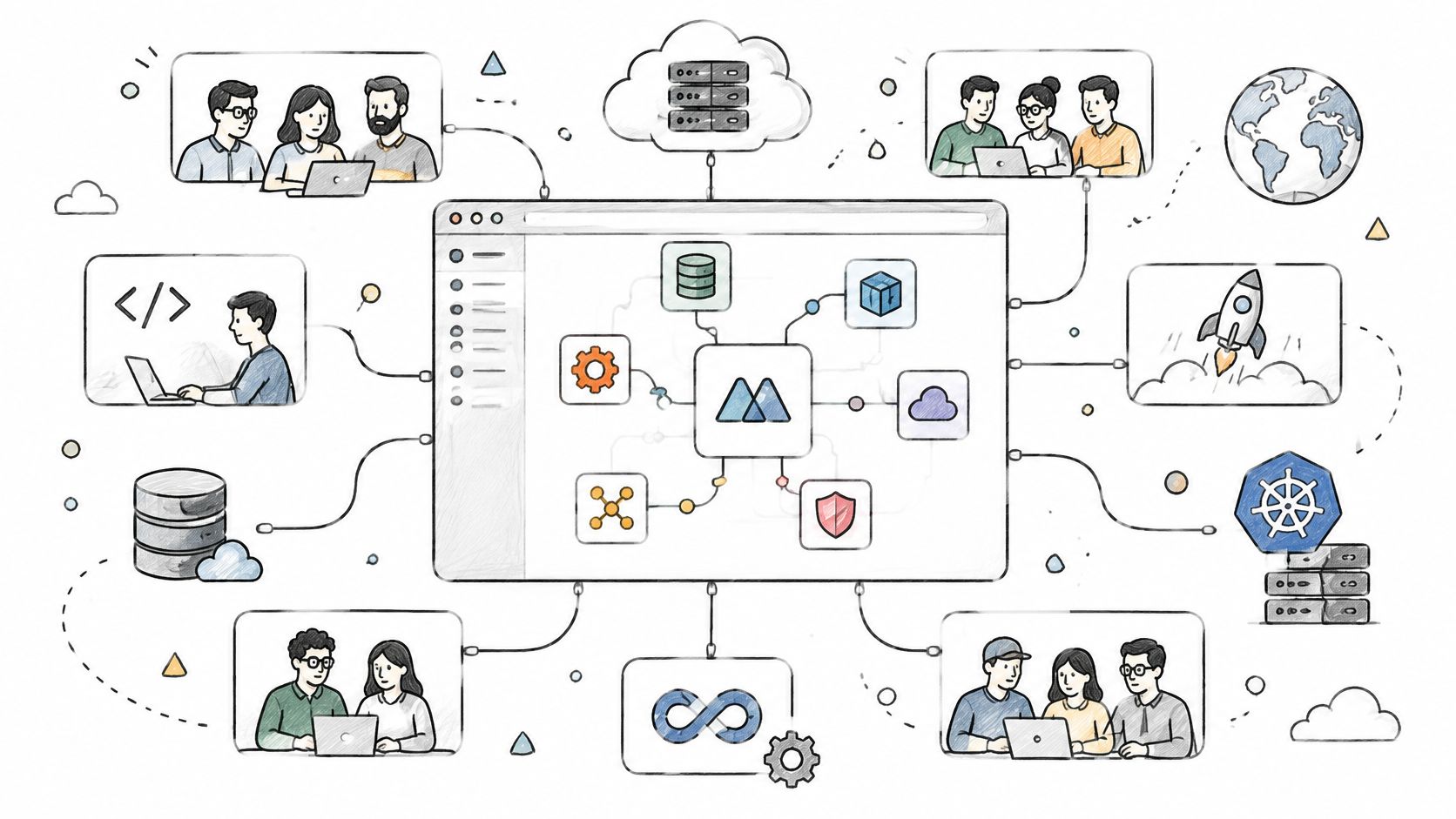
Sell a reliable service catalog first
Use Backstage with custom plugins, or build a smaller React and PostgreSQL application if Backstage's operating burden outweighs its benefits. Connect repository metadata, service ownership files, deployment status, and runbooks.
Your MVP should answer practical questions: who owns this service, where does it run, and how do I change it safely? Leave infrastructure provisioning out until catalog accuracy is dependable.
- Likely buyer: An engineering director whose teams have outgrown spreadsheets but lack dedicated platform capacity.
- Revenue path: Managed hosting plus paid connector setup, followed by a recurring workspace subscription.
- Cheap validation: Assemble a read-only catalog from exports and existing documents, then ask engineers to complete real service-discovery tasks.
Port, Cortex, and Humanitec are useful references when comparing catalog and orchestration boundaries. Don't confuse a portal with a platform. Showing a deployment button is easy; handling permissions, approvals, failures, and rollback behind that button is a separate product.
5. Authentication and User Management as a Service
Authentication is attractive because it's necessary and dangerous because customers depend on it to access their products. A small team shouldn't begin by inventing credential storage, token formats, or recovery protocols.
A more feasible wedge is organization-aware authentication for a specific application framework. Say a B2B SaaS company needs invitations, tenant switching, role assignment, and enterprise sign-in without rebuilding its account model.
Build on established identity components. Auth0, Clerk, WorkOS, Supabase Auth, and a cloud-native authentication platform are relevant comparison points when evaluating what customers can already adopt.
- Starter stack: Use an established OpenID Connect implementation, TypeScript SDKs, PostgreSQL, and a managed key service.
- Bounded MVP: Ship framework-specific components for login, invitations, organization membership, and session management.
- Revenue path: Charge SaaS companies for managed workspaces and enterprise connection capabilities, with clearly explained usage limits.
Treat security as operating work
Tenant isolation, session revocation, recovery, key rotation, and audit logging need explicit designs and tests. Independent security review belongs in the operating plan, not on a distant feature roadmap.
Among SaaS business ideas, authentication carries an unusually serious support obligation. An outage can lock customers out of their own businesses.
Validate with a prototype integration guide and a clickable account-management flow. Ask prospective buyers to walk through their last difficult enterprise onboarding request, then seek a paid integration commitment. If every prospect needs a different identity architecture, narrow the audience before building.
6. Backend-as-a-Service Platform
A generic Firebase or Supabase alternative is too broad for most small teams. Database operations, authorization, storage, functions, subscriptions, backups, and abuse prevention are each substantial responsibilities.
Instead, package a backend for a specific workload. For example, an AI document application might need tenant-scoped storage, background processing, vector search, and predictable deletion. That's a clearer product than a backend that does everything.
The following video offers additional context for evaluating the idea.
Manage a workflow, not a cloud
Use managed PostgreSQL with pgvector, S3-compatible storage, a durable job queue, and a TypeScript API. Reuse established authentication rather than making identity another product you must secure.
The MVP can provide document upload, job status, tenant-scoped retrieval, and deletion through an SDK. Exclude arbitrary customer functions and general-purpose realtime subscriptions. Appwrite and Convex are useful references for examining where your scope differs.
Charge application owners a base subscription plus metered storage and processing. Show spending controls early because poorly bounded jobs can make customer usage expensive for both sides.
Scope boundary: Don't accept arbitrary customer code until you can isolate workloads, limit resources, and investigate abuse.
Before writing software, offer a manual backend setup using existing managed services. Ask prospects to pay for the packaged workflow and discuss recurring maintenance explicitly. If they only want a starter template, sell that rather than forcing a subscription.
7. Continuous Integration and Build Acceleration Service
A slow pipeline isn't automatically a caching problem. Dependency downloads, oversized Docker contexts, serial tests, and underpowered runners require different fixes.
Choose a bottleneck you can measure and control. Docker build acceleration is a more credible starting scope than replacing a team's CI provider. Buildkite, Depot, Nx Cloud, and Bazel's caching ecosystem provide useful implementation and positioning references.
Consider a team rebuilding application images after small frontend changes. Your product could inspect cache misses, recommend Dockerfile changes, and provide a remote builder without changing the release workflow.
- Starter stack: Use BuildKit, isolated Linux workers, object storage, and a Go control plane.
- Bounded MVP: Support a selected CI integration, authenticated remote builds, cache inspection, and usage reporting.
- Buyer and billing: Sell to the engineering productivity or infrastructure owner, charging for reserved capacity or metered build usage.
Correctness comes before speed
Cache keys must include the inputs that affect results. A fast build that reuses an incorrect artifact is worse than a slow build, and cross-tenant cache sharing needs careful protection against information leakage.
Validate with a paid pipeline audit before operating infrastructure. Use the prospect's existing logs to separate queue time, execution time, and repeated work, then reproduce the proposed improvement in its current environment.
Don't promise a performance lift from a generic benchmark. The useful evidence is a repeatable comparison on the customer's workload, including cold-cache behavior and the cost of operating your service.
8. AI Code Review Assistant
Build an evidence layer, not a louder reviewer. A bot that leaves plausible but unhelpful comments creates another task for the engineer who must verify them.
The demand signal is specific: 66% of respondents were frustrated by AI solutions that were almost right, according to Stack Overflow's AI survey findings. That makes reproducible findings a stronger starting point than generating more review prose.
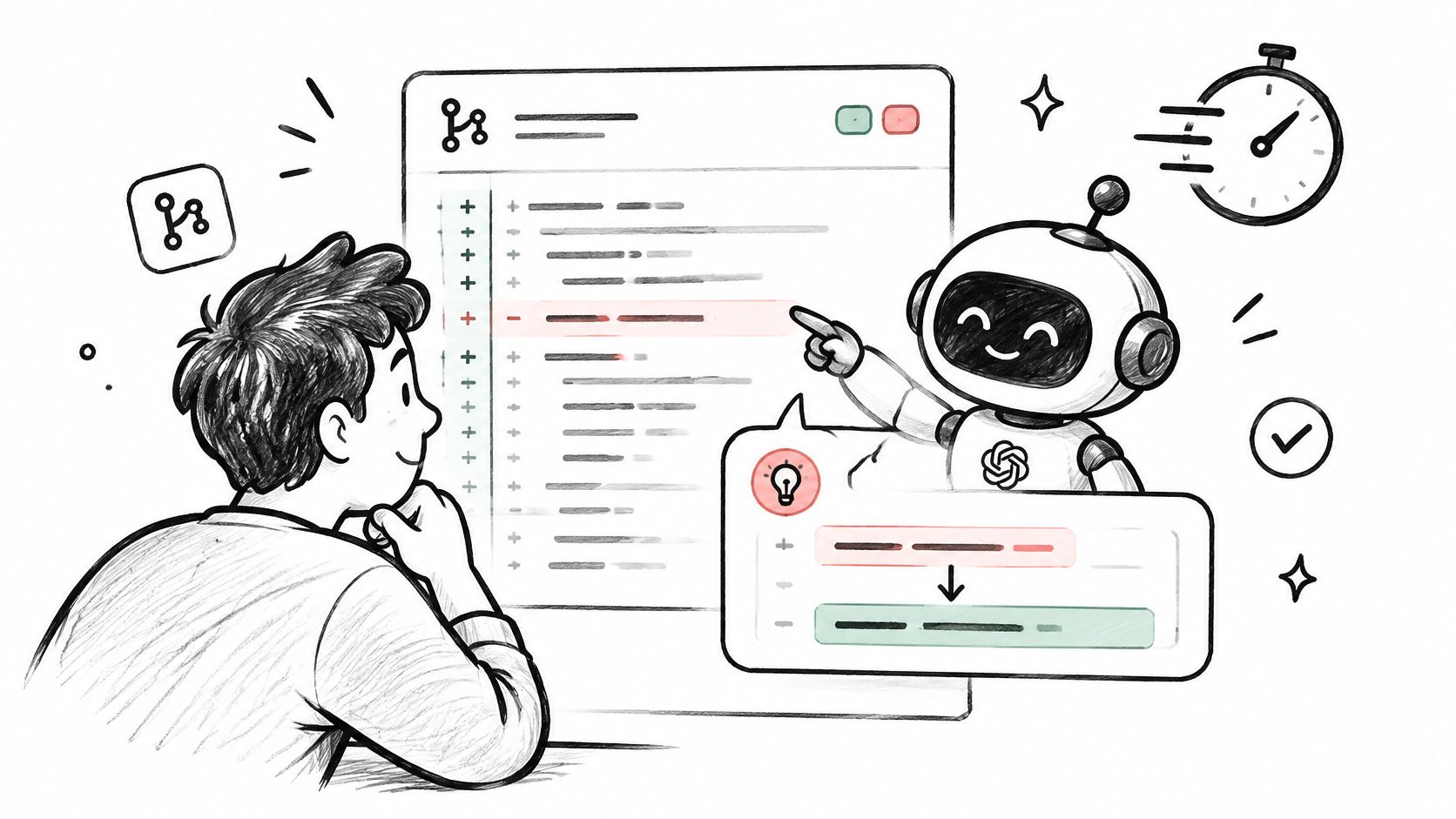
Make every finding inspectable
Use a GitHub App, TypeScript workers, static analysis, repository retrieval, and isolated test execution. Let a language model propose hypotheses, then attach evidence from type checks, tests, or relevant code paths.
A bounded MVP might review TypeScript authorization changes and flag routes that appear to bypass tenant checks. Don't begin with every language, style reviews, and autonomous fixes.
CodeRabbit, Greptile, and Qodo are useful comparison products. Use Loupe's guide to automated code reviews to frame evaluation questions, then judge your implementation against actual pull requests.
Charge engineering teams per active repository or contributor, with execution limits that protect margins. The buyer is a lead who owns review quality, not merely a developer interested in trying AI.
Validate by manually reviewing historical pull requests with permission. Record actionable findings, false positives, and whether reviewers would have wanted each comment before merge. A missed bug matters, but so does a stream of comments engineers learn to ignore.
9. Developer Onboarding and Codebase Knowledge Tool
A new engineer asks where invoice permissions are checked. Keyword search finds several files, but it doesn't explain which path handles the request or who maintains it.
Build permission-aware codebase navigation, not an unrestricted chatbot. Sourcegraph, Greptile, and Swimm are useful references for search, repository questions, and documentation tied to code.
Start with a language and framework you can analyze well. A TypeScript service using a conventional routing framework is a more manageable target than a mixed-language estate with generated code.
Answers need paths back to code
Use Tree-sitter, a language server, PostgreSQL full-text search, and optional vector retrieval. Preserve repository access controls during indexing and retrieval, and tie answers to a commit so users can inspect the exact source.
The MVP should locate entry points, show relevant call paths, identify owners, and answer questions with file citations. Avoid promising a complete architecture map when dynamic dispatch or runtime configuration makes the answer uncertain.
- Monetization: Charge engineering managers for private workspaces, with private deployment as a more demanding paid option.
- Validation: Run structured customer discovery interviews around recent onboarding tasks, not opinions about AI search.
- Worked test: Manually produce a navigation guide for a sanitized repository and ask a new engineer to complete a genuine change request.
Measure whether the engineer can find and verify the relevant code without repeated senior assistance. If the core problem is missing ownership or inconsistent architecture, a conversational interface alone won't solve it.
10. API Testing, Mocking, and Contract Testing Tool
A backend team changes a response field. Its own tests pass, but a consumer still expects the old shape. Contract testing is worth exploring when separate teams ship changes to shared interfaces.
Start with breaking-change detection in CI. Don't build another full API client alongside Postman or Insomnia. Use Pact and Stoplight Prism as implementation references for consumer contracts and schema-based mocking.
For example, a payments API team could compare proposed OpenAPI changes against the published contract and consumer fixtures. The pull request would explain which operation changed and why an existing client might fail.
- Starter stack: Use a Go or TypeScript CLI, an OpenAPI parser, containerized mock servers, and object storage for contract artifacts.
- Bounded MVP: Validate schemas, compare contracts, generate mocks, and publish a readable CI report.
- Revenue path: Offer a local CLI for adoption and charge for private contract registries, collaboration, and policy controls.
Know what schemas cannot prove
A schema can describe a valid response without proving that pagination, authorization, or business behavior remains compatible. Add consumer examples and executable checks rather than claiming that schema validation guarantees a safe release.
Browser checks address a different layer. Teams can find the right browser testing framework for user journeys while using your product to inspect API compatibility.
Validate by reviewing a prospect's API change history and generating a manual compatibility report. Ask whether the buyer would make the proposed checks part of its merge policy and pay to maintain them.
How the 10 developer startup ideas compare on audience, pricing model, and competition
| Item | Target Audience | Business Model | Example Players |
|---|---|---|---|
| Developer Documentation Platform | API-first SaaS companies and platform teams | Freemium with per-seat or per-project pricing | Stoplight, ReadMe, Mintlify, Redocly |
| Feature Flag and Progressive Delivery Service | Engineering teams practicing continuous delivery | Usage- or seat-based SaaS with open-source core | LaunchDarkly, Unleash, Flagsmith, Split.io |
| Error Monitoring and Application Performance Tool | Startups and mid-size engineering teams running production software | Freemium with usage-based pricing | Sentry, Datadog, Honeycomb, Rollbar |
| Internal Developer Portal | Engineering organizations with 50 or more developers | Enterprise SaaS with annual contracts | Backstage, Port, Cortex, Humanitec |
| Authentication and User Management as a Service | SaaS founders and developers building B2B or consumer applications | Freemium with monthly active user pricing and enterprise plans | Auth0, Clerk, WorkOS, Supabase Auth |
| Backend-as-a-Service Platform | Indie developers, early-stage startups, and agencies | Freemium with usage-based pricing and team plans | Supabase, Firebase, Appwrite, Convex |
| Continuous Integration and Build Acceleration Service | Engineering teams with slow builds or large monorepos | Usage-based pricing by build minutes or compute, with enterprise contracts | Buildkite, Depot, Nx Cloud, Bazel |
| AI Code Review Assistant | Software teams with frequent pull requests and limited reviewer capacity | Per-developer monthly subscription with enterprise tiers | CodeRabbit, Greptile, GitHub Copilot, Qodo |
| Developer Onboarding and Codebase Knowledge Tool | Engineering managers and teams with large or legacy codebases | Per-seat enterprise SaaS, sometimes with self-hosted licenses | Sourcegraph, Greptile, CodeSee, Swimm |
| API Testing, Mocking, and Contract Testing Tool | Backend and frontend teams building APIs and microservices | Freemium with team and enterprise governance plans | Postman, Insomnia, Pact, Stoplight Prism |
Pick One Idea, Validate It in Two Weeks, Then Decide
Start by writing the problem in a sentence with a real buyer. An engineering manager needs to stop new hires from depending on senior developers for routine codebase navigation is sharper than developers need better onboarding. If you can't identify the buyer and the costly task, the idea isn't sharp enough yet.
Then choose the cheapest test that exposes a purchasing decision. Documentation audits, pipeline reviews, and contract reports can be delivered manually. Authentication and backend products may need integration mockups, but they still don't require a production service before you ask for a commitment.
Validation means proving that strangers will give money, time, or a clear yes before you build. Friends praising your idea and developers starring a repository don't establish willingness to buy.
Test the business assumption
Write down what would make you stop. Perhaps buyers won't grant repository access, can't identify a budget owner, or only need a one-time migration. These aren't objections to explain away, they're constraints on the business you can build.
For a SaaS product, a landing page with Stripe checkout for a paid waitlist can test purchasing intent. Explain what exists, what doesn't, what buyers receive, and how refunds work. Don't imply that an unbuilt product is ready.
- Build: Buyers commit to a recurring problem, accept the proposed workflow, and can explain who authorizes payment.
- Iterate: The pain is clear, but a specific assumption about scope, audience, or packaging fails.
- Move on: Prospects tolerate the workaround, won't commit, or need incompatible custom solutions.
Make that decision within 14 days. The purpose of the deadline isn't to prove an entire company can work, it's to prevent an attractive technical project from consuming months without commercial evidence.
Choose the operating burden too
Documentation checks and contract analysis can begin outside production request paths. Authentication, feature delivery, and backend infrastructure put your team closer to customer outages. Those businesses may fit your skills, but they demand a stronger support and security commitment.
Price the ongoing work, not just the initial build. Include data retention, integration maintenance, incident response, and the human effort required to investigate incorrect results. A narrow product with dependable margins is more useful than broad adoption you can't afford to support.
Find Startup Idea sources its ideas from real Hacker News and Reddit pain points, making it a practical place to identify problems worth investigating. Treat those complaints as interview leads, not proof of demand. Pick the problem you can verify, the buyer you can reach, and the smallest result someone will pay you to deliver.
Find Startup Idea offers startup concepts sourced from real Hacker News and Reddit pain points, including developer-tool opportunities. Visit Find Startup Idea, save a problem you'd be willing to own, and test its buyer and payment assumptions before your first commit.